

Safavid Coinage: The Complete History & Collecting Guide
دولت صفوی
The Safavid Empire, ruling from 1501 to 1736 CE, transformed Persia in ways that still shape the region's religious and cultural identity today — establishing Twelver Shi'ism as the state religion for the first time and reasserting genuine Persian political unity after centuries of fragmented rule that had followed the earlier Mongol invasions. Over more than two centuries and eleven principal reigns, the dynasty operated over 125 mints and repeatedly overhauled its own currency system, leaving behind one of the richest and most complex coinages in Islamic numismatics. This guide draws on the standard academic reference for the series — Stephen Album's A Checklist of Islamic Coins — to give a genuinely detailed picture of how Safavid money actually worked.
The CurrencyThe Safavid Monetary System Explained
Silver: the toman and dinar system
Safavid money is more intricate than most Islamic coinages. Silver values were reckoned against the toman, a notional accounting unit worth 10,000 dinars. The dinar itself was never struck as a physical coin. Like the toman, it existed purely on paper. Each silver denomination carried a fixed dinar value: a pul was worth 25 dinars, a shahi 50 dinars, an abbasi 200 dinars, and a rupi (introduced later) 500 dinars.
Why the same coin name can mean different weights
Here is what genuinely separates Safavid coinage from most other Islamic series. Mint masters periodically reduced the silver content backing the toman — sometimes gradually, sometimes in deliberate stages. This means the actual weight of a "shahi" or an "abbasi" changed repeatedly across the dynasty's 235 years. A shahi struck under Isma'il I could weigh anywhere from roughly 4.7g to over 10g, depending on exactly when and where workers struck it. By the time of Fath Ali Shah's Qajar successors, the whole system had been re-based again.
Album's Checklist documents at least a dozen distinct silver weight standards across the dynasty. Some regions used different standards simultaneously. For much of the 16th century, the empire actually ran three parallel weight standards at once: a western standard, a separate eastern standard covering Khorasan, Quhistan, Sistan and Astarabad, and a local Mazandaran tanka standard inherited from the preceding Aq Qoyunlu dynasty. This is exactly why coins of Isma'il I and Tahmasp I remain so difficult to catalogue precisely even today.
Gold: the ashrafi and mithqal
Gold followed a separate, somewhat steadier logic, based on either the ashrafi (theoretically 3.55g) or the mithqal (starting around 4.70g, settling near 4.61g by the century's end — a weight Iran kept using for gold well into the 20th century). Gold production itself swung dramatically with the empire's fortunes. Output was substantial under Isma'il I and Tahmasp I, then tapered to almost nothing for roughly a century, from about 1610 to 1720 — likely reserved only for royal presentation pieces during that stretch — before resuming modestly under the dynasty's final rulers.
DenominationsKey Denominations
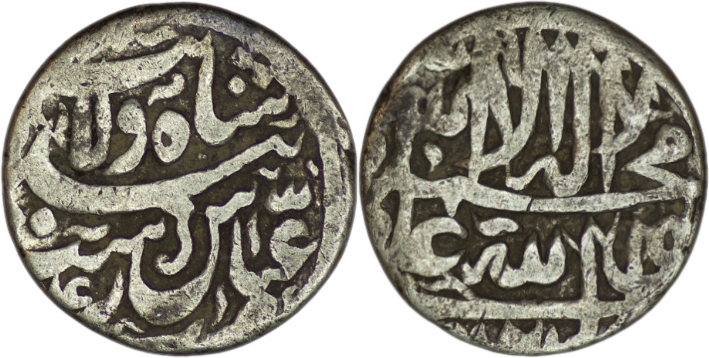
Shahi
The basic silver unit and the backbone of the circulating currency for most of the dynasty's history, its actual weight shifting with each currency reform.
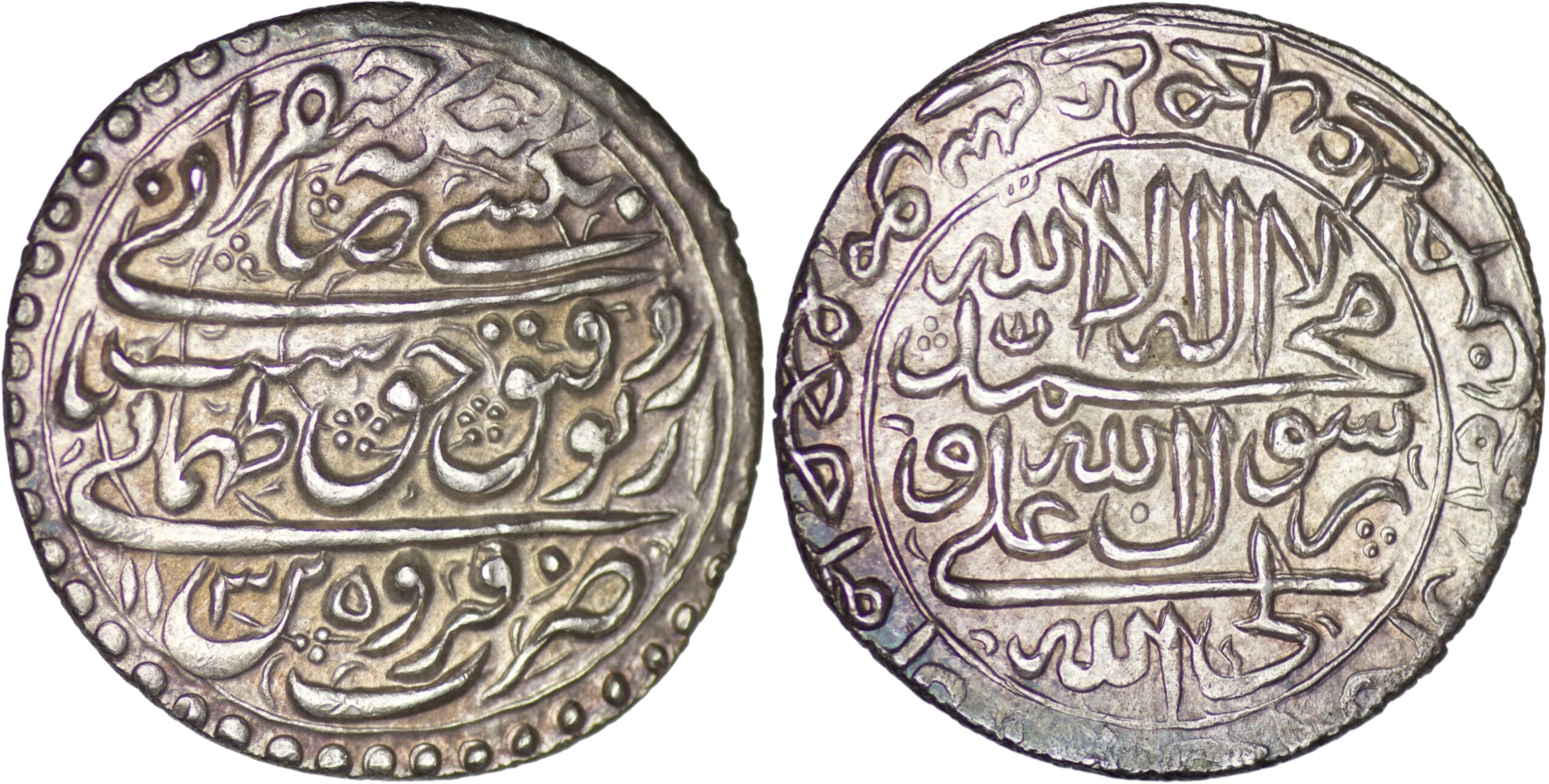
Abbasi
Worth 4 shahi (200 dinars), introduced under and named for Shah Abbas I; it became the preferred standard circulating silver coin for much of the 17th century.
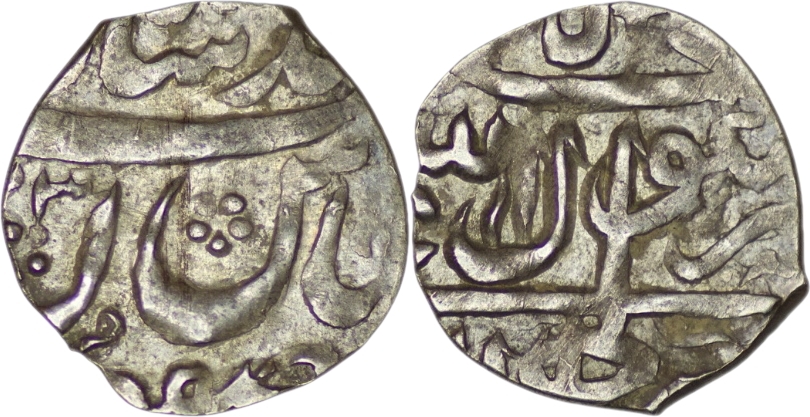
Bisti
A smaller silver coin worth 20 dinars (from bist, "twenty" in Persian), most prominent as the standard denomination for an 11-year stretch under Tahmasp I.
Larin
Silver wire folded over and struck, popularly nicknamed "hairpin money." Struck for the Indian Ocean trade, particularly to Sri Lanka, and the root of the denomination "laari" still used in the Maldives today.
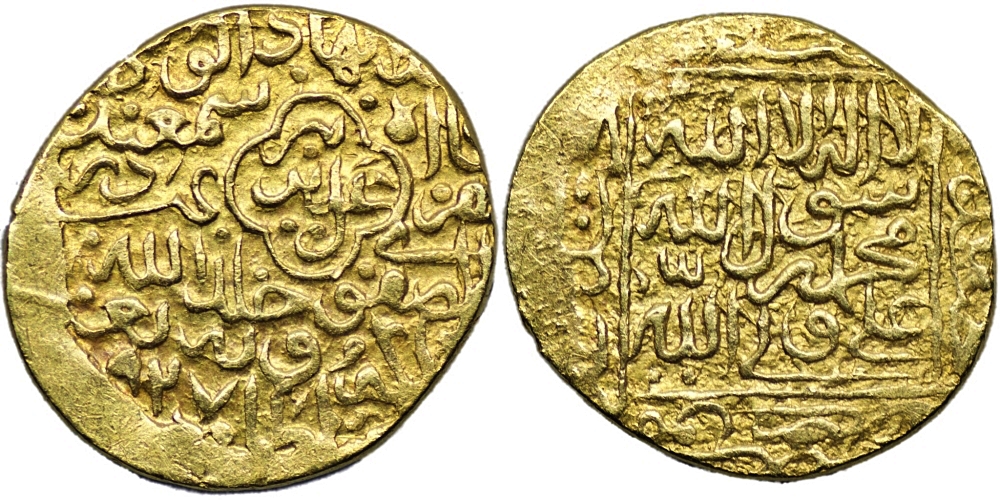
Ashrafi
The principal gold coin, theoretically 3.55g, minted from the dynasty's founding through its final decades, though in wildly varying quantities depending on the era.
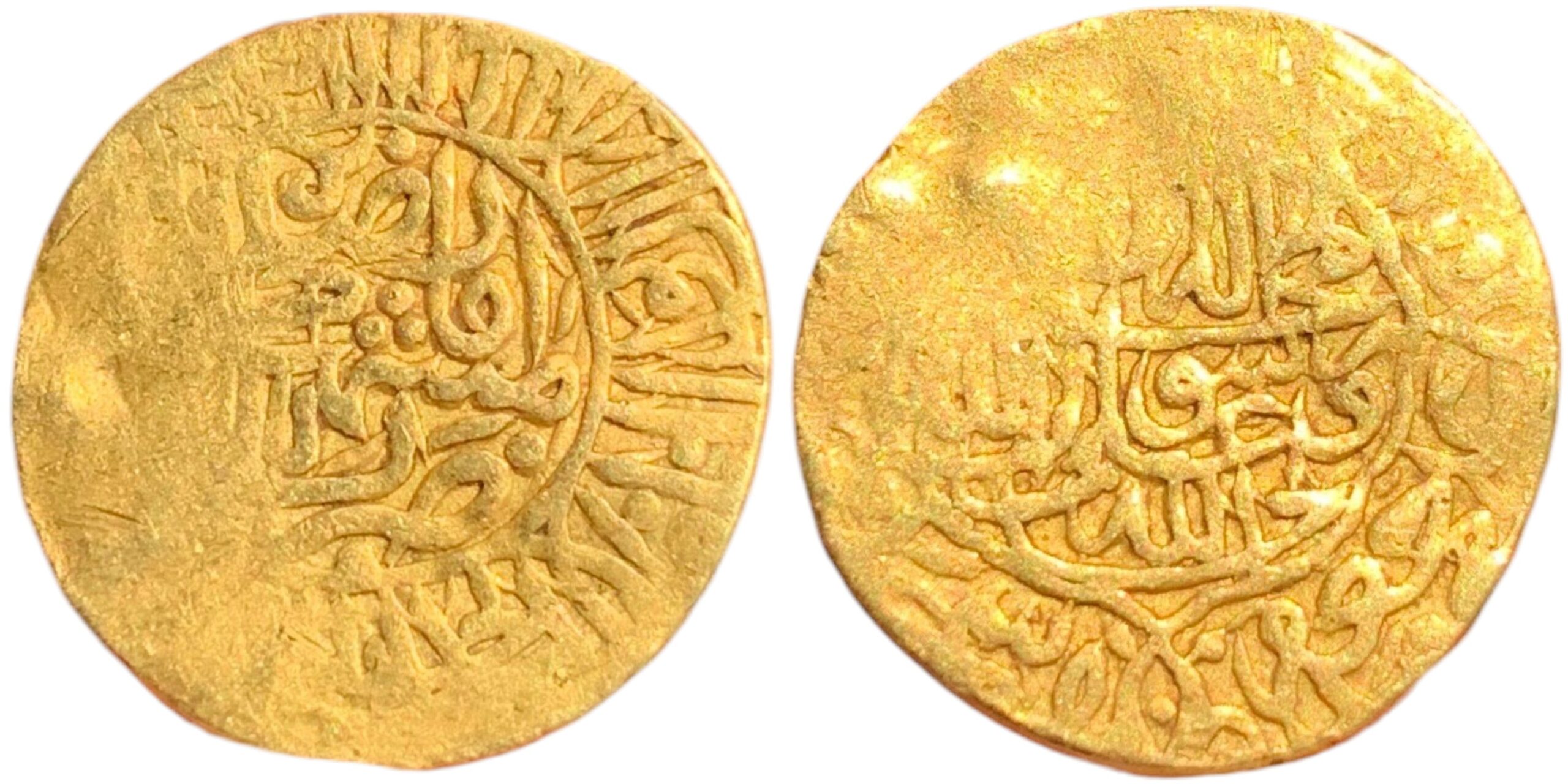
Mithqal
A gold standard settling at 4.61g, distinct from though related to the ashrafi — the weight unit Iranians continued using to price gold coins well into the 20th century.
One further silver standard is worth knowing, even without a photo example here: the rupi, or mahmudi, a later 11.52g standard adopted from Mughal India, especially in Khuzestan province for trade with the subcontinent. The 2-shahi coin under this system came to be popularly called a mahmudi, after a similarly-weighted Gujarati coin.
Reign by ReignTimeline of Safavid Shahs and Their Coinage
Eleven principal reigns span the dynasty's 235 years, each leaving a distinct numismatic fingerprint.
| Shah | Reign (AH / CE) | Numismatic note |
|---|---|---|
| Isma'il I | 907–930 / 1501–1524 | Founder; introduced the ashrafi and the first shahi standards, though regional design varied enormously and many coins lack mint or date entirely. |
| Tahmasp I | 930–984 / 1524–1576 | Longest Safavid reign; silver standard reduced repeatedly (at least six distinct western standards recorded), eastern and western coinage finally unified in 975/1567. |
| Isma'il II | 984–985 / 1576–1578 | Notoriously replaced the Shi'ite kalima with a Persian couplet, reportedly unwilling for sacred text to circulate in "infidel hands"; restored after his death. |
| Muhammad Khudabandah | 985–995 / 1578–1588 | Standardised coinage empire-wide on the 4.61g mithqal/2-shahi system still used at the dynasty's peak; his reign saw the last major countermarking campaign in Iranian history. |
| Abbas I "the Great" | 995–1038 / 1588–1629 | Reorganised mint technique in 1026/1617, dramatically improving strike quality; introduced the abbasi denomination that bears his name. |
| Safi I | 1038–1052 / 1629–1642 | Continued Abbas I's 2,000-nokhod standard; coinage well documented thanks to Stan Goron's specialist research. |
| Abbas II | 1052–1077 / 1642–1666 | Calligraphy shifted from upright naskhi to flowing nasta'liq script mid-reign; abbasi coins are sometimes found counterstamped with the Dutch East India Company monogram. |
| Safi II / Sulayman I | 1077–1105 / 1666–1694 | Underwent a second coronation and name change from Safi to Sulayman after a run of natural disasters was blamed on the original name; coinage reform in 1095/1684 restored silver integrity after earlier debasement. |
| Sultan Husayn | 1105–1135 / 1694–1722 | Final significant Safavid ruler; surrendered to invading Hotaki Afghans in 1135/1722, marking the empire's effective collapse. |
| Tahmasp II & Abbas III | 1135–1148 / 1722–1735 | Nominal rulers during the chaotic Afghan occupation and Nadir Shah's rise; real power increasingly held by Nadir as viceroy. |
GeographyMints of the Safavid Empire
Only two mints ran continuously
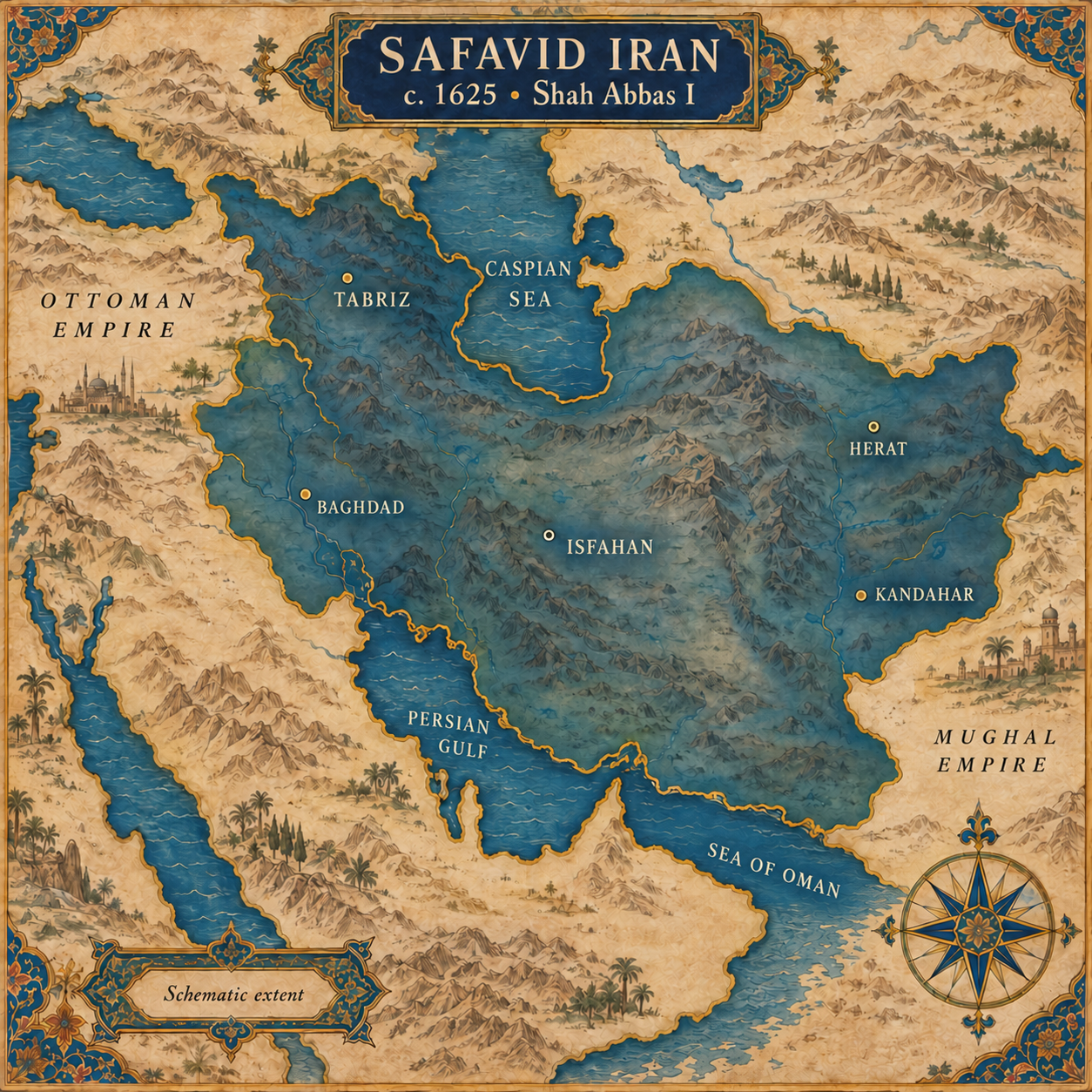
Across their 235 years, the Safavids operated more than 125 mints. Only two of them stayed consistently active throughout the entire era: Tabriz and Isfahan. Everything else came and went with politics, war, and regional control.
The second tier of regular mints
A wider group of mints appears frequently, though not in every reign: Ganja, Nakhjawan, Irawan, Tiflis, Ardabil, Rasht, Lahijan, Amul, Sari, and Barfurushdih in the north and Caucasus; Mashhad, Herat, Kashan, Qumm, Shiraz, Yazd, Kirman, Nimruz and Astarabad further south and east; and several Khuzestan mints including Dawraq, Ramhurmuz, Dizful and Huwayza.
Why the mint name matters
Identifying the correct mint matters for both historical research and collector value. A coin from a well-documented mint like Tabriz is straightforward to place. Pieces from smaller or shorter-lived mints in Khuzestan or the Caucasus, by contrast, can be genuinely rare finds — even when the denomination itself is common.
Art & ScriptDesign, Script and Religious Inscriptions
Religious text as design
Safavid coins carry the Shi'ite declaration of faith and, in most periods, the names of the Twelve Imams. This was a direct numismatic expression of the dynasty's central religious project — Shi'ism, stamped onto the empire's everyday money.
From naskhi to nasta'liq
Calligraphic style tells its own story. Mints struck coinage in naskhi script through the dynasty's first century. Then nasta'liq — a more flowing, cursive style — became increasingly common on obverse inscriptions from the reign of Abbas I onward, even as reverses generally stayed in naskhi. This shift gives collectors one of the more reliable visual cues for roughly dating an unclear or partial coin.
The great countermarking campaign
Countermarking was common on some other Islamic coinages but relatively rare under the Safavids, with one striking exception. Under Muhammad Khudabandah, mints applied a massive official countermark — reading 'adl shahi, "just shahi," typically followed by a mint name — to coins circa 992–996 AH. Qazwin and Lahijan saw the heaviest use, almost certainly tied to a tax-validation exercise. It stands as the last major countermarking episode in Iranian monetary history.

Golden AgeThe Reign of Shah Abbas I
No account of Safavid coinage is complete without particular attention to Shah Abbas I's reign, which represents the dynasty's high point across nearly every measure — territorial control, economic prosperity, architectural achievement, and diplomatic reach. Numismatically, his most lasting legacy came in 1026/1617, when he reorganised minting technique across the empire: dies stopped being cut noticeably larger than the coin flans, meaning strikes from this point onward are markedly more complete and legible than the frequently off-flan coinage of his predecessors. He also introduced the denomination that would carry his name for the rest of the dynasty's history — the abbasi.
CollapseThe Empire's Decline
The Safavid dynasty's eventual collapse came via the Hotaki Afghan siege and capture of Isfahan in 1135/1722, when Sultan Husayn surrendered. The following decade was genuinely chaotic numismatically: puppet Safavid rulers (Tahmasp II, Abbas III), a brief Ottoman occupation of Iran's northwest, competing Hotaki Afghan coinage with distinctly Sunni inscriptions, and finally the rise of Nadir Shah — who began minting coins anonymously as viceroy before deposing the last nominal Safavid and founding the Afsharid dynasty in 1148/1735. Read more about the fall of the Safavid Empire for the fuller historical picture.
CollectingCollecting Safavid Coins
Why this series rewards depth
The dynasty's long reign and genuinely complex monetary history give Safavid coinage real depth for a serious collector. You can trace shifts in mint activity, weight standards, and calligraphic style across more than two centuries of a single, coherent dynasty.
Three practical notes for buyers
- Early coins are harder to attribute. Mint and date are frequently missing or off-flan on Isma'il I and Tahmasp I issues, and regional design variation was the norm until the 984/1576 unification.
- Strike quality jumps after 1026/1617. A well-struck, fully legible coin from before Abbas I's minting reform is a genuinely more significant find than an equally sharp example from afterward.
- Weight alone can date a coin. Mints revised standards so often that a precise weight reading — not just a visual type match — is sometimes the only way to place a coin to the correct sub-period.
FAQFrequently Asked Questions
What makes Safavid coins different from earlier Persian Islamic coinage?
The explicit Shi'a religious content — the kalima plus the names of the Twelve Imams — is the most distinctive feature, directly reflecting the state religious transformation the Safavids introduced, a meaningful departure from the broadly Sunni framework of earlier dynasties like the Abbasids and Seljuks.
Why do Safavid coin weights vary so much even within the same denomination?
The silver standard backing the toman was revised repeatedly throughout the dynasty — sometimes several times within a single reign — so a "shahi" or "abbasi" from one decade can weigh noticeably more or less than the same-named coin from another. Precise weighing is often the only reliable way to place an undated example.
Which Safavid shah's coins are most sought after by collectors?
Shah Abbas I's coinage attracts particular interest given his reign's historical significance and the marked improvement in strike quality after his 1617 minting reform, though coins from throughout the dynasty's 235-year span each carry their own collecting appeal.
What is a larin, and why is it called "hairpin money"?
A larin is silver wire folded over and struck, originally fairly thick and compact under Isma'il I but growing progressively longer and thinner through the dynasty's history, eventually resembling a bent hairpin — hence the nickname. It was intended chiefly for Indian Ocean trade, particularly to Sri Lanka.
Are Safavid coins a good area for a themed collection?
Yes — the long, well-documented dynasty with distinct denominations, mints, weight standards and eleven principal reigns offers genuine structure for a themed collection, whether organised chronologically by shah, geographically by mint, or around a single denomination like the abbasi across its full history.
Sources & Further Reading
- Album, Stephen. A Checklist of Islamic Coins, 3rd edition, 2011 — the standard reference for Safavid coinage, covering denominations, mints, and weight standards in detail.
- Farahbakhsh, Hushang. Iranian Hammered Coinage 1500–1879 A.D., Berlin, 1975.
- Rabino di Borgomale, H.L. Coins, Medals & Seals of the Shahs of Iran, Hertford, 1945.
- Poole, R.S. A Catalogue of Coins of the Shahs of Persia in the British Museum, London, 1887.
Browse our current Safavid coin stock or get in touch about specific shahs or mints.