

Short answer: for an NGC cert lookup, enter the certification number and grade from the label into NGC's free Verify Certification tool. You can also scan the QR code on the back of the holder. Then check that the description, grade and photos match your coin and holder. PMG offers a similar free check for banknotes. A matching number is not enough on its own. The photos are what show whether the slab is the real one.
Why a number alone is not proof
A graded slab is only worth what its certificate says. So the first job when you buy a slab is the NGC cert lookup. It takes about a minute and it is free.
But the check has a catch. NGC has seen fake holders that copy a real certification number. That is why NGC lists a "possible counterfeit holder" alert. A number that exists in the database does not prove the slab in your hand is the real one.
The fix is to compare. NGC says nearly every coin it has graded since October 2008 was photographed. You compare those photos with the coin and holder you are holding.
Where to find the certification number
The number is printed on the label, just above the barcode. It has two parts. The digits before the dash identify the submission. The three digits after the dash are the line number for that coin.
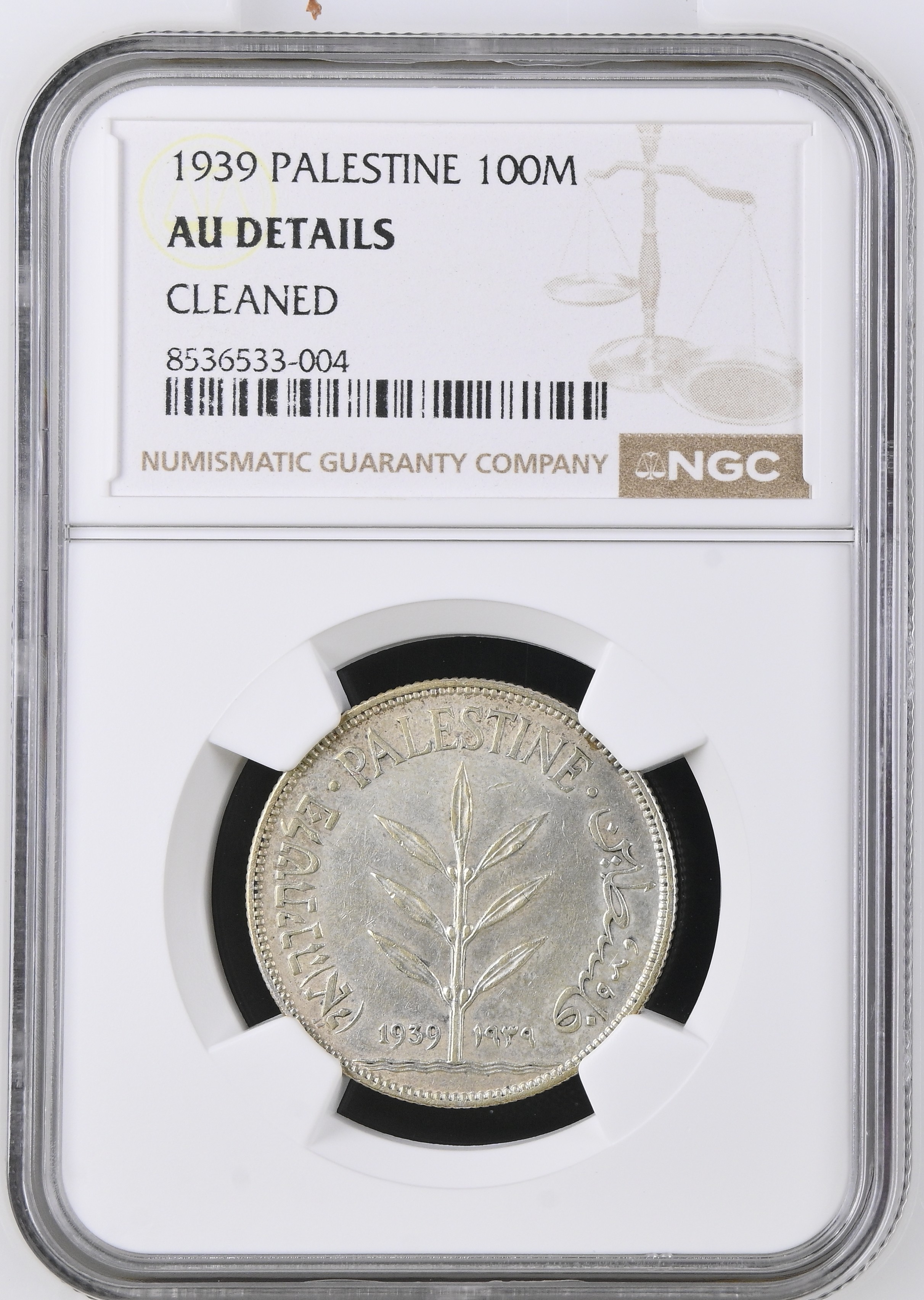
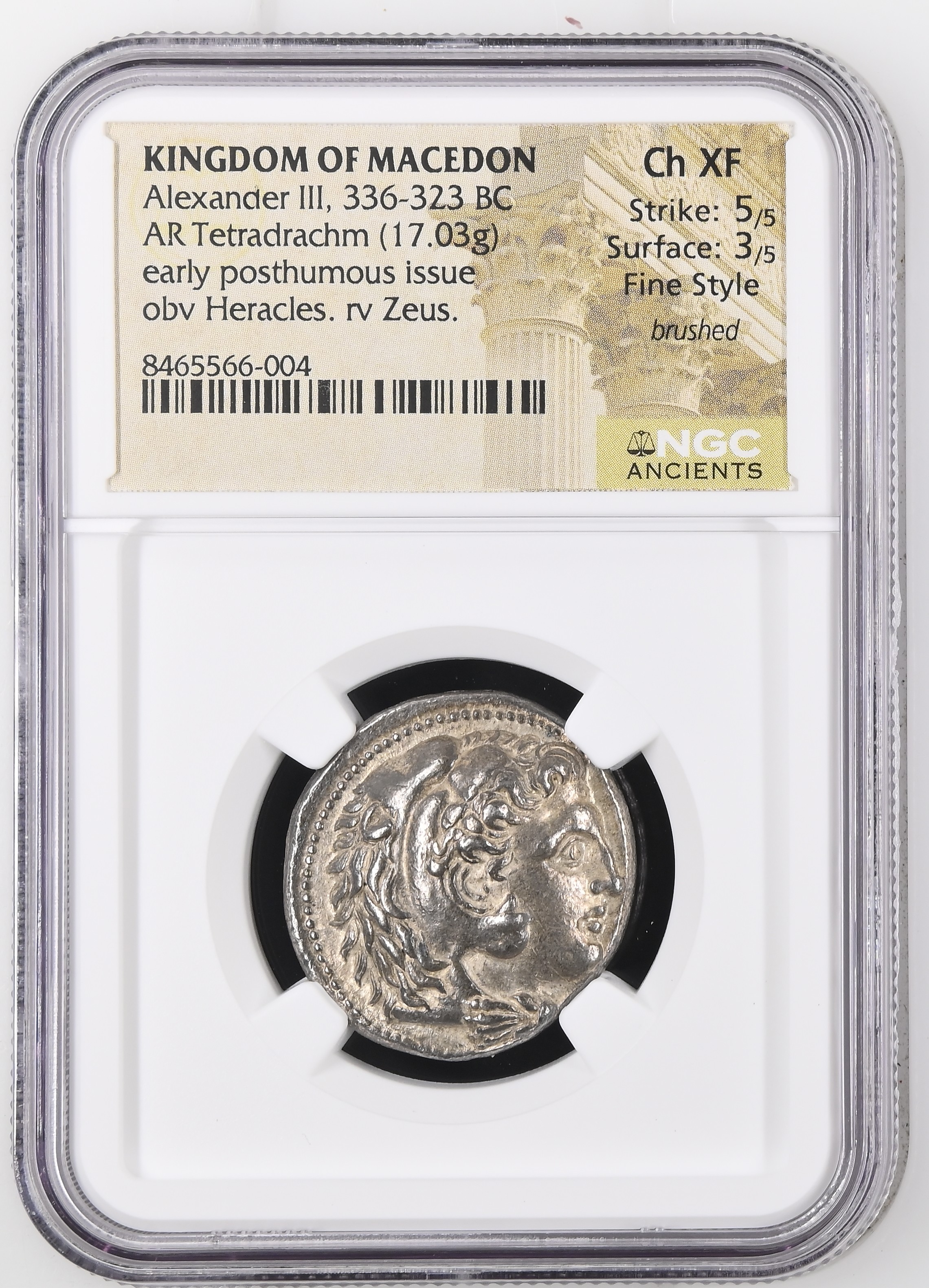
Both slabs are from our own stock. The number sits in the same spot on a modern and an ancient label.
You will also see the grade on the label. You need both. NGC's tool asks for the number and the grade. Our guide to reading an NGC slab line by line explains every part of the label.
NGC cert lookup, step by step
- Read the number and the grade. Copy the certification number exactly as printed. Note the grade too, for example "AU Details" or "MS 63".
- Open NGC's Verify NGC Certification page. Enter the number and pick the grade. Hyphens are optional. NGC says the check is free.
- Or scan the code. NGC's page says you can scan the QR code on the back of the holder with your phone. In the NGC app you can also scan the barcode.
- Read the result. Check the description and the grade against the label in your hand.
- Compare the photos. Look at both sides of the coin in NGC's images. Match the marks, the toning and the position of the coin in the holder.
- Read any alert. If NGC shows a warning, stop and read the next section before you pay.
NGC says it has imaged virtually all non-bulk submissions since October 2008. Older coins, and some bulk submissions, may have no photos. You can still check the number, but you cannot use the photo comparison. Be extra careful then.
The same free check works before you buy. If a seller lists a certification number, you can run the NGC cert lookup from your sofa. If a seller will not give you the number, that tells you something.
What the NGC alerts mean
NGC's results page can show an alert. These are NGC's own meanings, in plain English.
| Alert | What NGC says it means |
|---|---|
| Contact NGC Customer Service | NGC knows of a possible issue and wants you to get more information. There can be many reasons. |
| Possible counterfeit holder | NGC has seen a counterfeit or tampered holder using this number. Contact NGC. |
| Reported stolen | NGC has had a credible report that the coin was stolen. |
| Mechanical error | The label has a typing error. The coin should go back to NGC for correction. |
| Deleted | The coin was removed from the NGC census, possibly in error. If you own it, NGC asks for photos of the front and back of the holder. |
"No match" is different from an alert. If the number is not found, first check that you typed the number and grade correctly. NGC also says only coins that have been shipped can be searched. If it still fails, do not pay.
Checking a PMG certificate
PMG grades banknotes, not coins. If you buy a graded note, you verify it on PMG's own site.
PMG's note verification tool is free on PMGnotes.com. You enter the PMG certification number from the label. The tool then shows the note's grade and other details. Greysheet has also reported that PMG's tool matches images of millions of notes, so look for the picture and compare it with your note.
One change to know about. PMG removed its Serial Number Search. The certification number search is the one that remains. If you have a question or no match, PMG customer service handles it.
The rule is the same as with NGC. Check the number, then compare what the tool shows with the note and holder in your hand.
Want a graded coin you can check yourself? Ask us for the certification number of any graded piece.
Shop the coin store →How to spot a fake slab
NGC says its holders and labels use advanced security features. It does not list them publicly, so we will not guess at them. What NGC does tell you is to compare the coin, the label and the holder with its images.
Checks that come from NGC
- The number must be found by the lookup tool.
- The grade and description must match the label.
- NGC's photos must match your coin, label and holder.
- Any alert on the result needs an answer from NGC.
- Buy from an NGC Authorized Dealer or a dealer you trust.
Red flags from our own experience
- The seller will not give the number or photos of both sides.
- The price is far below similar graded coins.
- The label has odd spelling or blurry printing.
- The holder looks cracked, glued or opened.
- Someone contacts you out of the blue and says they work for NGC.
The last flag comes from NGC itself. It says it does not buy or sell coins, and that you should be wary of unsolicited calls, emails or social media messages from anyone claiming to work for NGC.
The other red flags are our own rules of thumb, not an NGC list. None of them proves a fake alone. A real slab can have a typo, which is what the mechanical error alert is for. Treat a flag as a reason to ask questions, not as a verdict.
Never skip the photo comparison. A fake holder can carry a real number. Only the photos show whether the coin inside is the coin NGC graded.
Pre-purchase checker
Before you pay for a graded coin
Tick what is true. The checker is a guide, not a guarantee.
If you think a slab is fake
Do not pay. If you have already paid, act quickly. NGC's advice is to contact NGC at once and include as much as you can: high-resolution photos, receipts and proof of payment.
- Contact NGC and send clear photos of the holder, the label and the coin.
- Send the receipt and proof of payment.
- Contact the seller and ask for a refund.
- Keep every message and record of the sale.
Two points from NGC are worth knowing. The NGC Guarantee does not apply to a coin in a counterfeit or tampered holder. And if NGC confirms a holder is fraudulent, it returns the coin with a letter and images of the holder. It never returns the fake holder parts.
Buying graded coins safely
The simplest protection is the seller. NGC points buyers to NGC Authorized Dealers and trusted dealers. Pashiz Coins is an NGC authorised dealer in London, and you can ask us for the certification number of any graded coin before you buy. Then check it yourself.
If you plan to send your own coins to NGC, see our UK guide to NGC and PMG grading cost, process and turnaround. And if a label says "Details", our guide to the NGC details grade explains what that means for value.
Questions people ask
How do I use an NGC cert lookup?
Find the certification number and grade on the label. Enter both in NGC's free Verify NGC Certification tool. Hyphens are optional. Then compare the result and the photos with your coin.
Where is the NGC certification number?
It is printed on the label, above the barcode. It looks like 8536533-004. You can also scan the QR code on the back of the holder.
Is a matching certification number proof the slab is real?
No. NGC has seen counterfeit holders that use real numbers. Compare NGC's photos with your coin and holder, and read any alert on the result.
What if NGC has no photos of my coin?
NGC says it has imaged virtually all non-bulk submissions since October 2008. Coins before that date, and some bulk submissions, may have no images. You can still check the number, but be extra careful, and ask NGC if you are unsure.
Is the check free?
NGC describes the check on its website and app as free.
Does PMG grade coins?
PMG grades banknotes. For a graded note, use PMG's free note verification tool on PMGnotes.com with the certification number from the label.
What do I do if I think I have a fake slab?
Contact NGC with clear photos, receipts and proof of payment. Contact the seller for a refund. NGC says its guarantee does not cover a counterfeit or tampered holder.
Not sure about a slab?
Send us the certification number and photos. As an NGC authorised dealer, we are happy to take a look with you.
NGC grading service Shop the coin store WhatsApp usSources: NGC, Verify NGC Certification; NGC, Always Verify Your NGC Coins with the NGC Website or App; NGC Help Center, Verify NGC Certification; NGC, Enhanced Certification Verification with Coin Images; NGC, Security Center; PMG, PMG Updates Online Note Verification Tool; Greysheet, New verify-PMG tool matches images of over 3 million notes. Both slab photos are from Pashiz Coins stock.