

Umayyad Dirhams: The Complete Guide to Reading the Inscriptions
الدرهم الأموي
Umayyad silver dirhams, following the coinage reform introduced by Caliph Abd al-Malik around AH77 (696–697 CE), represent a genuinely radical numismatic decision: the complete removal of imagery — portraits, symbols, figurative design of any kind — that had defined coinage across the ancient and late antique world up to that point, replaced entirely by Arabic script. Understanding how to read that script transforms a Umayyad dirham from a decorative object into a precisely datable historical document. This guide draws on Stephen Album's A Checklist of Islamic Coins and Michel Klat's standard catalogue of post-reform dirhams to give a genuinely thorough picture of how the series actually works.
BackgroundWhy the Coinage Reform Happened
Before Abd al-Malik's reform, early Islamic coinage had continued to closely imitate Byzantine and Sasanian designs, including figurative imagery, largely as a matter of monetary continuity and practicality. The reform represented a deliberate, theologically motivated break from that practice, asserting a distinctly Islamic monetary identity grounded entirely in text rather than image. Album's Checklist notes that after several experimental failures, the reform coinage was successfully introduced beginning in AH77 for gold, AH79 for silver, and roughly AH78–80 for copper. Only this reform coinage counts as "Umayyad" in the strict numismatic sense — earlier Umayyad-period coins are classified separately as Arab-Byzantine and Arab-Sasanian issues.
LayoutWhat's Inscribed on a Dirham
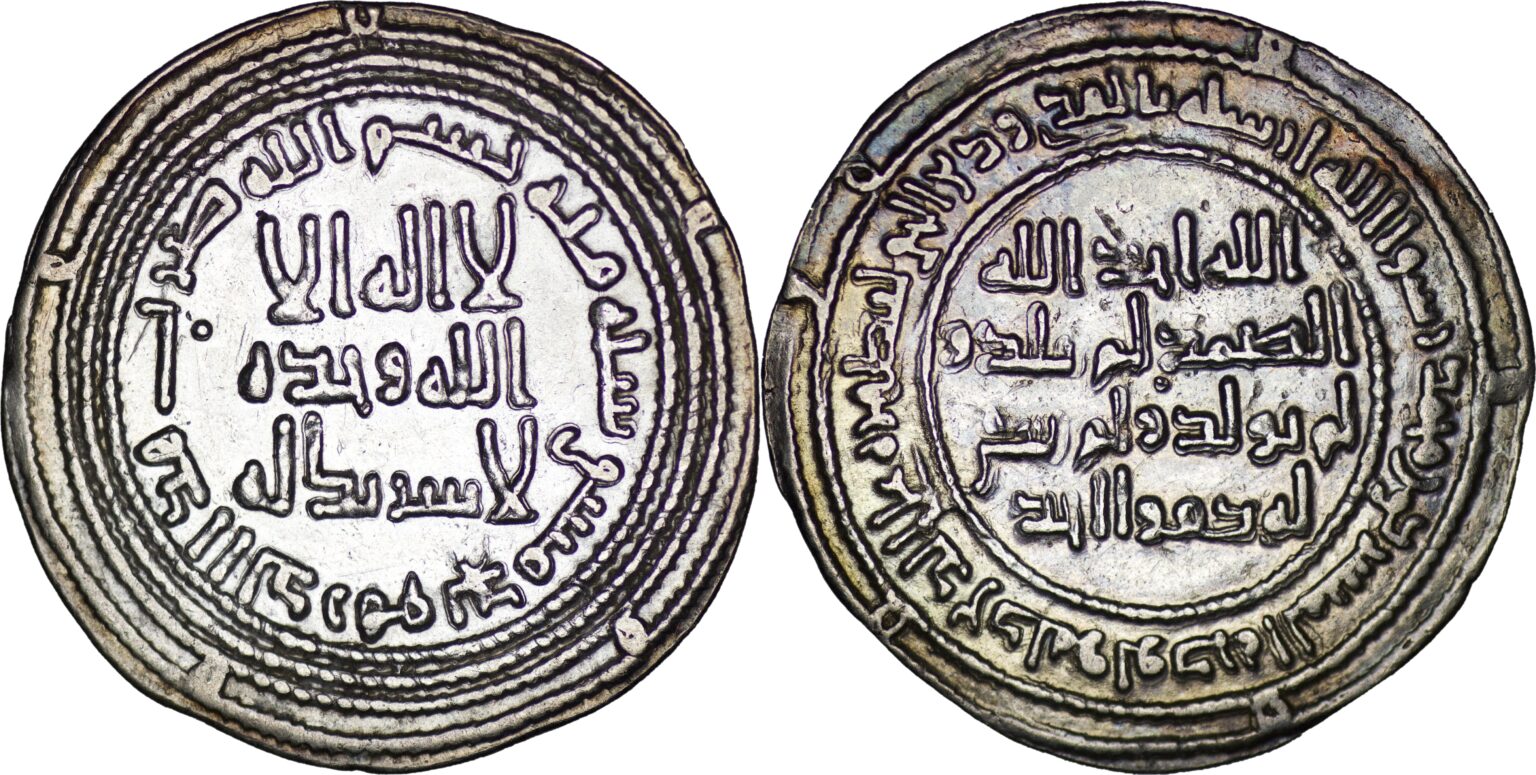
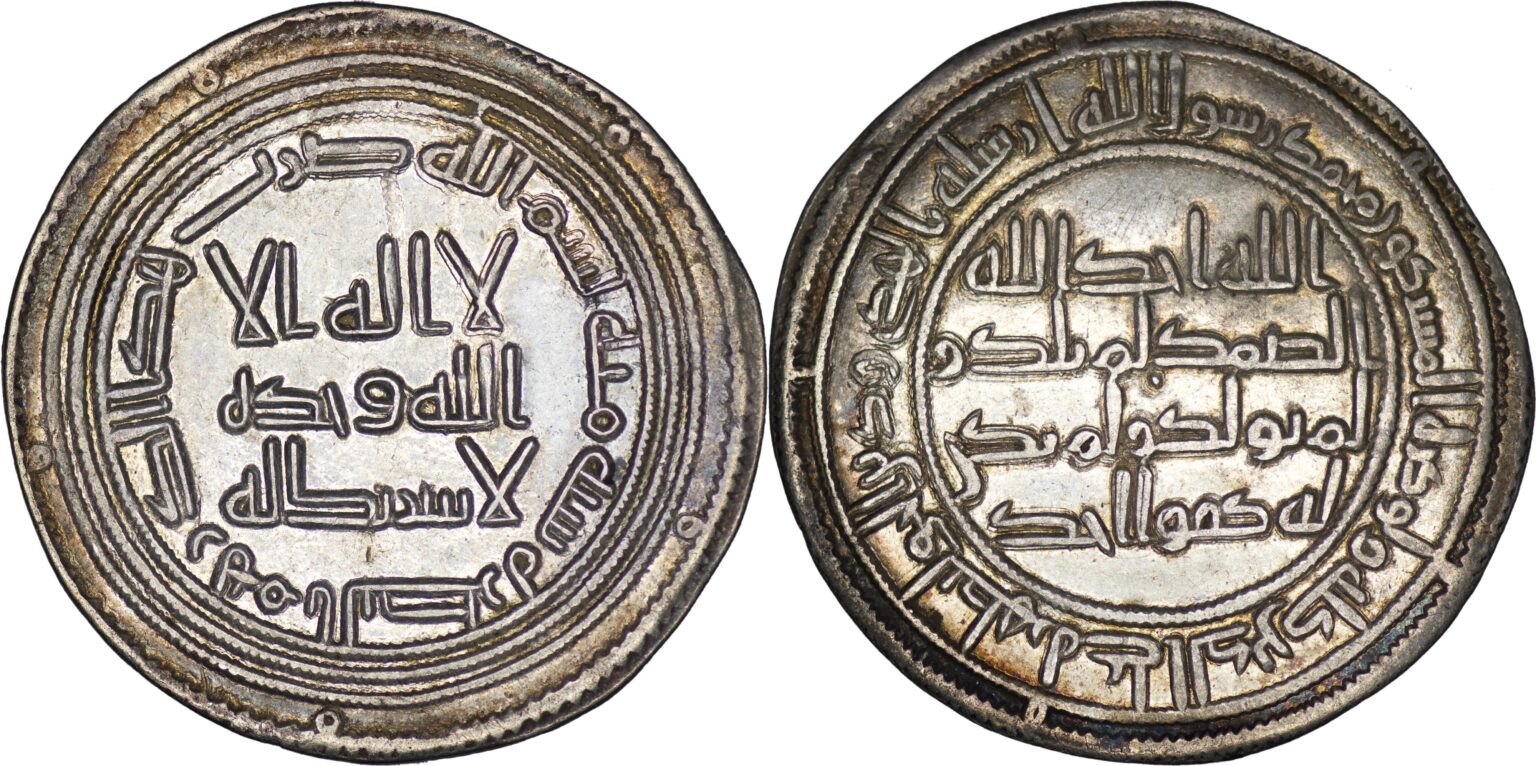
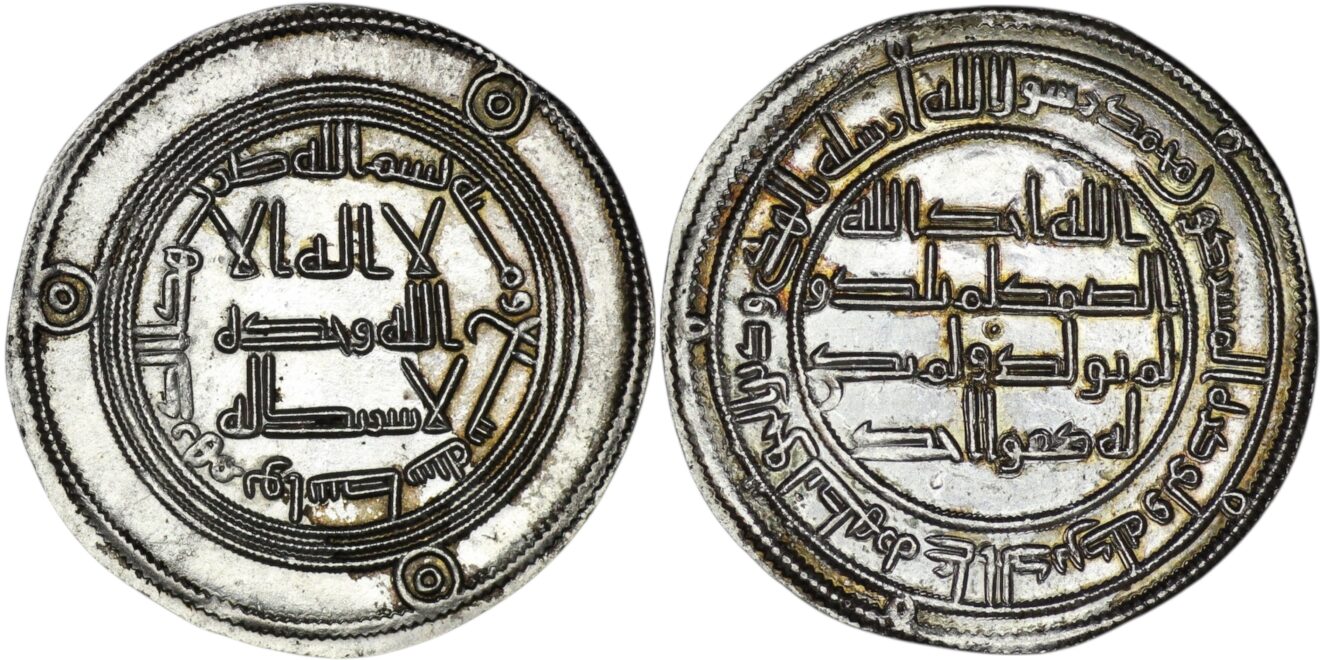
Every reformed dirham follows the same fixed layout, which is exactly what makes the series so approachable once you know the pattern. The obverse field carries the shahada — the Islamic declaration of faith. The reverse field quotes Qur'an Surat 112 in full: "Allah, the One and Only; Allah, the Eternal, Absolute; He begetteth not, nor is He begotten; And there is none like unto Him." The reverse margin carries a version of Qur'an 9:33: "Muhammad is the messenger of Allah, He sent him with guidance and the Religion of Truth, to proclaim it over all religion, even though the Pagans may detest it." And the obverse margin — the part collectors actually care about most — carries the mint name and the Hijri date.
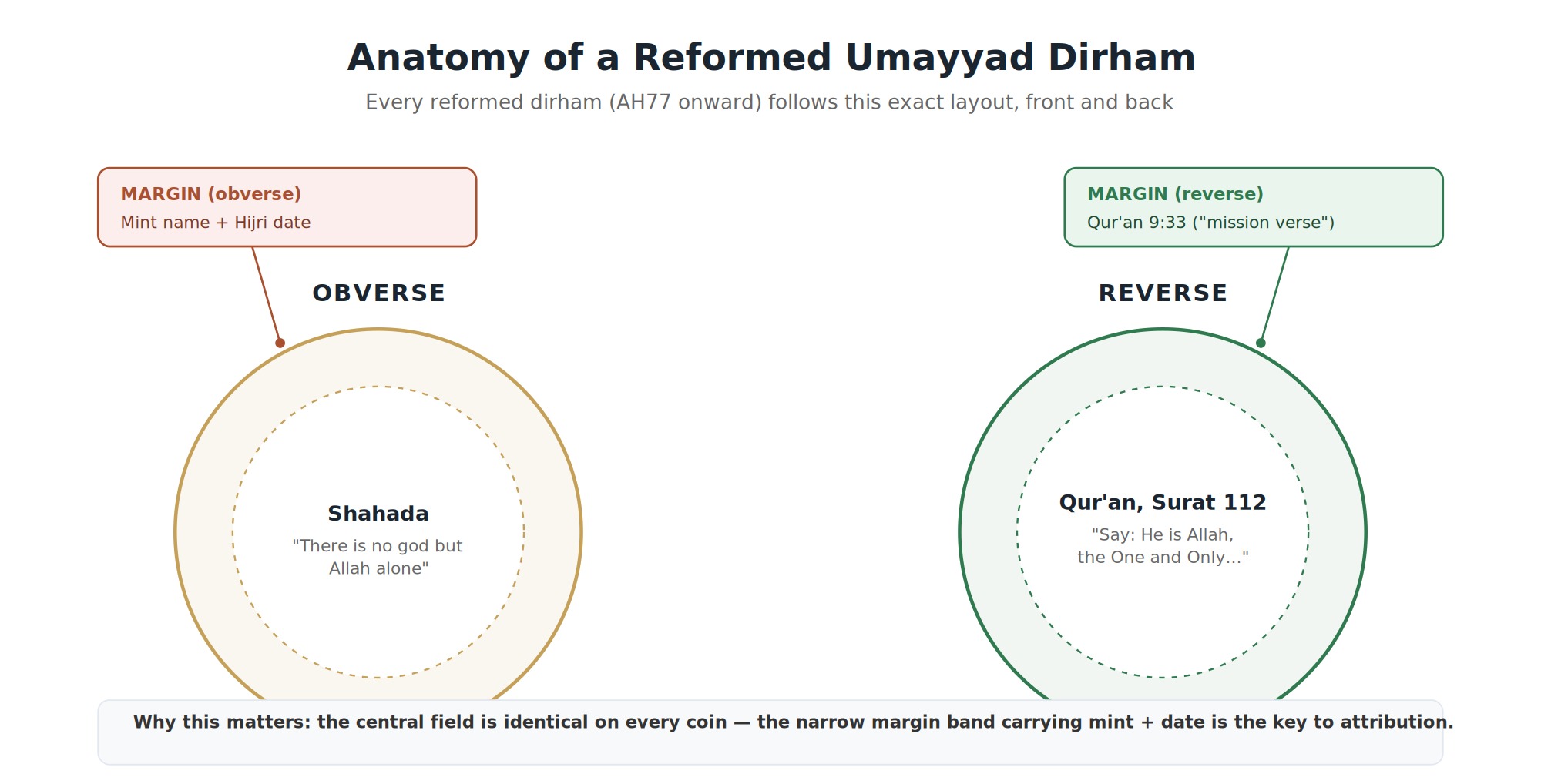
Because the central religious inscriptions never change, gold dinars follow the same basic scheme in shortened form, with Qur'an 9:33 moved to the obverse margin rather than the reverse. Album notes that the regular post-reform gold coinage carries no mint name at all and is presumed struck solely at Damascus — with a handful of rare exceptions from Ifriqiya and al-Andalus discussed further below.
MetrologyWeight Standards
The gold dinar weighed one mithqal, about 4.25–4.26g, which became a standard for most early Islamic coinage generally. The silver dirham started lighter, at around 2.85g, but by the 90s AH (710s CE) the weight had increased to something approaching the "canonical" dirham weight of about 2.97g — roughly 70% of the mithqal — a theoretical standard that, remarkably, is still referenced in the 21st century, with only minor variations across the intervening thirteen centuries.
The Key SkillReading the Margin: Mint and Date
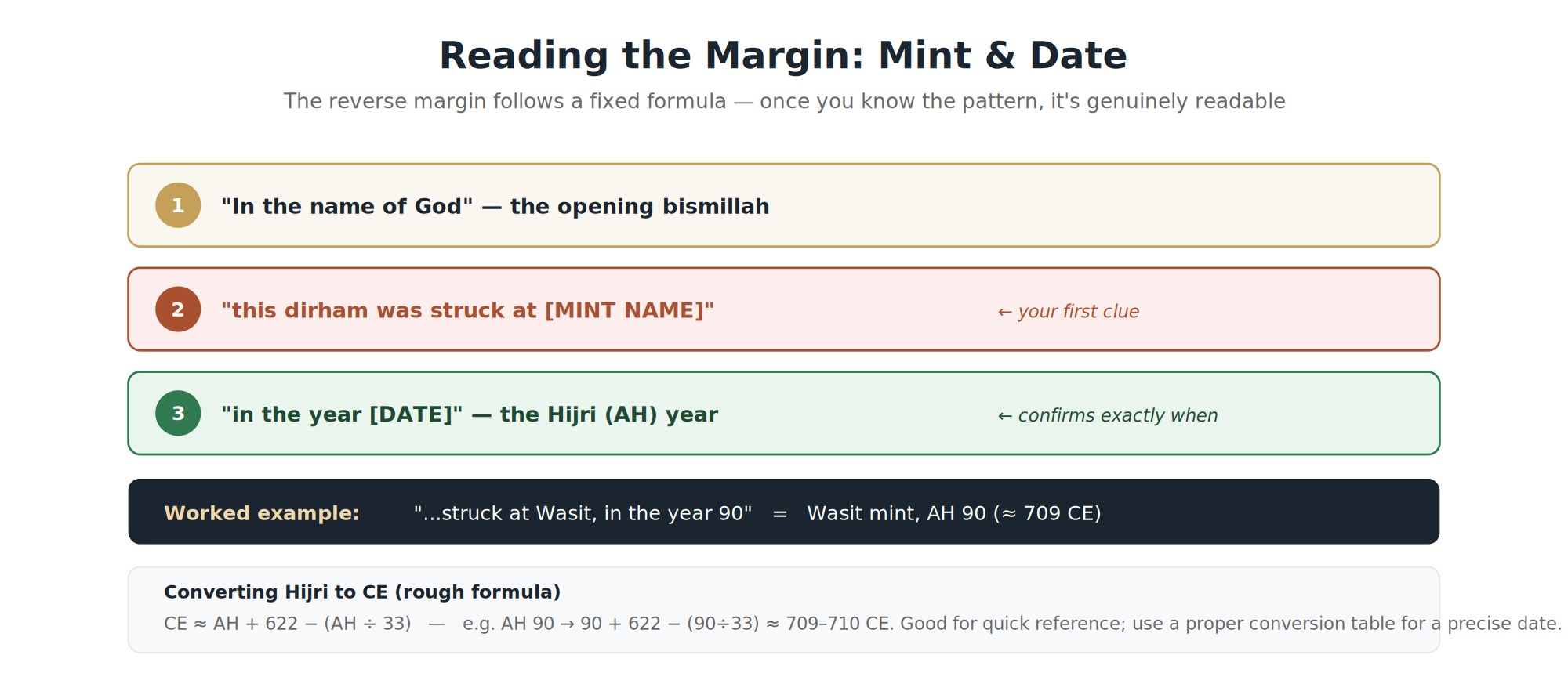
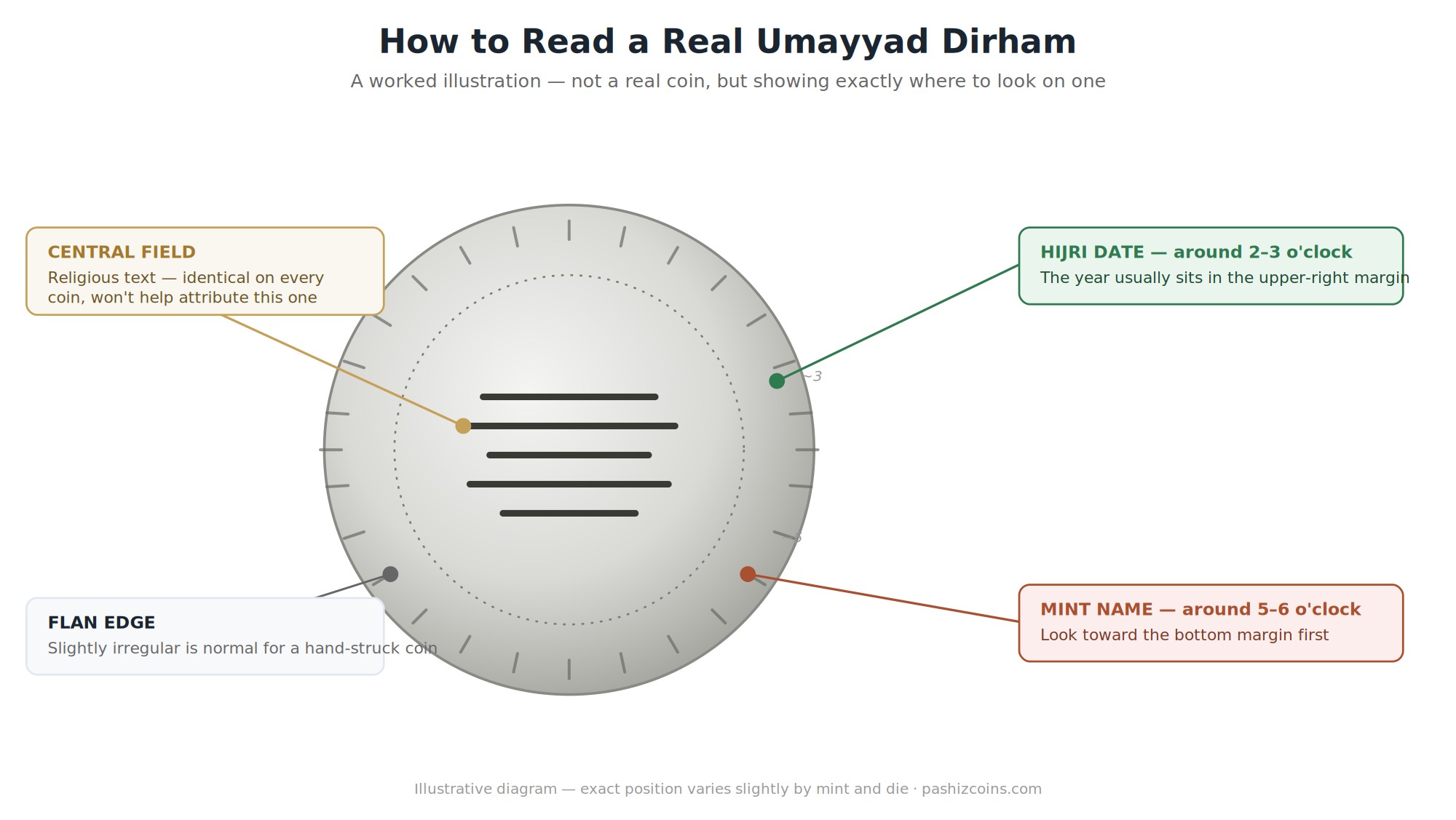
The margin formula is genuinely consistent: a "bismillah" opening, then "this dirham was struck at [mint name]," then "in the year [date]." Because Umayyad dirhams were always carefully struck, Album notes the date is discernible on essentially every example except those that are heavily worn or damaged — this is one of the most reliably legible series in all of Islamic numismatics.
GeographyThe Mints, Ranked by Rarity
About 100 Umayyad silver mints have been recorded in total, but the series is dominated overwhelmingly by just two: Wasit and Damascus (Dimashq) together typically account for at least 75% of any hoard. Wasit alone was active almost continuously from AH84 to 132, and Damascus struck coins in nearly every year from 79 to 132. Everything else ranges from occasionally available to genuinely rare.
| Mint | Rarity | Active years (AH) |
|---|---|---|
| Wasit | Common (A) | 84–132, most years |
| Dimashq (Damascus) | Common (A) | 79–132, nearly all years |
| al-Basra | Common (C) | 78–82, 100–101, 103, 128+ |
| Kirman | Common (C) | 90–98, 100–103 |
| Darabjird | Common (C) | 90–98 common; 79–81 & 102 rare |
| Istakhr | Common (C) | 90–98 common; 79–84, 99, 102 rare |
| Marw | Common (C) | 79–84, 90–102, then 110, 114–115 |
| al-Kufa | Scarce (S) | 78–82, 100–102, 128–129 |
| Jayy | Scarce (S) | 78–83, 90–98, 102 (very rare) |
| Ifriqiya | Scarce (S) | 97–120, plus a few 124–134 |
| al-Andalus | Rare (R) | 103–135, most dates extremely rare |
| Sijistan | Rare (R) | 90–102, 127–130, 132 |
| 'Uman | Extremely rare (RRR) | 81 & 90 only |
| Jiruft | Extremely rare (RRR) | 82 only |
Market HistoryNotable Rarities and Auction Records
Because Umayyad dirhams are so attractively struck and easy to read, they're popularly collected by mint and date — and the rarest mint/date combinations have achieved genuinely extraordinary prices.
- 'Uman, year 90 — sold for £1,080,000 (~$1.7 million) at Morton & Eden in April 2011, the all-time record for an Umayyad dirham.
- Jiruft, year 82 — previously held the record, fetching £90,000 in 1999.
- The AH77 gold dinar — the very first purely Islamic coin — has sold for figures approaching $250,000–$800,000+ depending on the era and market conditions, with year 77 commanding by far the largest premium of any date.
On the more accessible end, common dates from Wasit, Damascus, or al-Basra remain genuinely affordable — it's specifically the rare mint/date combinations, not the series as a whole, that reach these extraordinary figures.
Buyer BewareForgery Warnings Specific to This Series
Know these before you buy
Album's Checklist flags several specific, documented forgery patterns for this series: coins purporting to be from mints that never actually struck Umayyad dirhams — including Makka, al-Bahrayn, Haram, Hims, Mukha, and Qumm — are modern forgeries. More troublingly, some genuine coins have had their date or mint altered and are then sold to unwary collectors at inflated prices. A group of forged common-date dirhams, primitively machine-struck circa 1965, was discovered in Beverly Hills in the early 1980s. From the late 1990s onward, more deceptive forgeries of rare or previously unknown dates and mints began appearing, typically re-engraved from genuine common dirhams — these are usually identifiable on close comparison with documented genuine examples.
Practical AdviceWhat This Means When Buying
- Learn to read the margin yourself. Even without fluent Arabic, recognising the numeral forms and a handful of common mint names — Wasit, Damascus, al-Kufa — lets you independently verify the two most valuable pieces of information on any coin, rather than relying entirely on a seller's description.
- Treat any rare mint claim with extra scrutiny. Given the documented forgery patterns above, a dirham attributed to a genuinely rare mint or an unlisted date deserves a specialist's confirmation before you pay a rare-mint premium.
- Ask for the weight. A genuine reformed dirham should sit close to the canonical ~2.97g standard (or ~2.85g for the earliest issues) — a significant deviation is worth questioning.
- Buy from a dealer who can confirm the reading themselves. A dealer who can point to the mint name and date directly on the coin — rather than repeating a generic listing description — is giving you independently verifiable information.
CollectingBuilding a Collection by Mint and Date
Because the mint network expanded and contracted with the empire's administrative reach year by year, a collection built specifically around tracking different mints — or a single mint's production across multiple years — offers a genuinely research-driven approach to this series, turning a set of visually similar coins into a coherent historical study of the caliphate's territorial control. Album notes that around 1990s pricing peaks, extremely rare mint/date combinations reached tens of thousands of dollars before settling back to more grounded levels after major institutional buyers largely stepped back from the market circa 1998 — a reminder that even within a well-documented series, demand and pricing shift over time.
FAQFrequently Asked Questions
Do all Umayyad dirhams follow exactly the same design?
Yes — the central inscriptions (shahada on the obverse, Qur'an 112 on the reverse) are completely standardised across the entire empire following Abd al-Malik's reform. It's only the marginal mint-and-date text that varies from coin to coin.
Which two mints should a beginner learn to recognise first?
Wasit and Damascus — together they account for at least 75% of any typical hoard, so learning to recognise these two mint names alone will let you read the majority of dirhams you encounter.
How can I tell if a "rare mint" dirham is genuine?
Given documented forgery and alteration patterns specifically targeting rare mints and dates, always get independent specialist confirmation before paying a rare-mint premium — and be aware that certain claimed mints (Makka, al-Bahrayn, Hims, Qumm among them) never struck Umayyad dirhams at all.
Is the Hijri date always fully legible?
On the great majority of examples, yes — Album's Checklist specifically notes that because Umayyad dirhams were carefully struck, the date is discernible except on heavily worn or damaged specimens, which is unusually reliable for a coin series this old.
Why did the AH77 gold dinar become so valuable?
It's recognised as the first purely Islamic coin ever struck, making it a landmark piece independent of its numismatic rarity alone — a combination of genuine scarcity and historical significance that has driven it to some of the highest prices in the entire series.
Sources & Further Reading
- Album, Stephen. A Checklist of Islamic Coins, 3rd edition, 2011 — the standard reference used throughout this guide for weights, mint rarity, and market history.
- Klat, Michel. Catalogue of the Post-Reform Dirhams: The Umayyad Dynasty, London, 2002 — the definitive specialist catalogue of Umayyad silver dirhams.
- Walker, John. A Catalogue of the Arab-Byzantine and Post-Reform Umayyad Coins, British Museum, London, 1956.
Browse our current Umayyad dirham stock or get in touch if you'd like help attributing a specific coin.