

Telesphoros: The Creepy Hooded Child-God on an Ancient Greek Coin
Telesphoros was a small, hooded child-god of recovery, worshipped in the 2nd century AD. He stood beside Asklepios, the god of healing. Today he looks delightfully creepy, and he appears on a tiny, extremely rare bronze coin from the Greek city of Myrina.
Chapter 1Meet the little hooded one
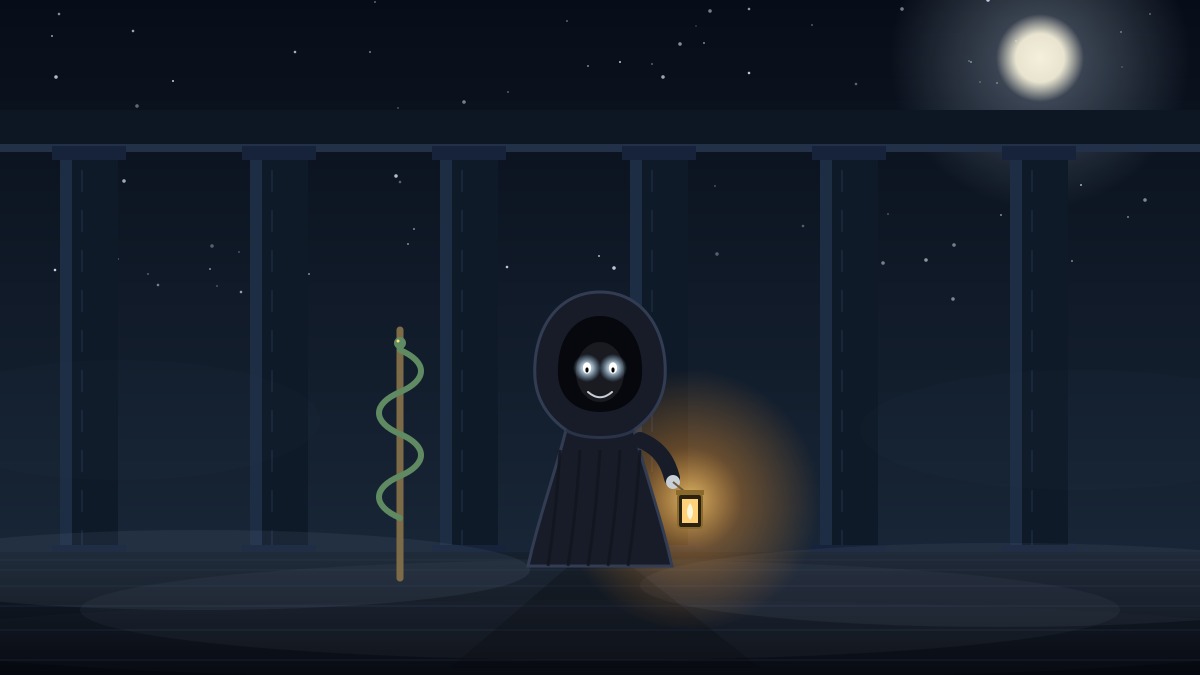
Imagine walking through an ancient temple at night. The torches flicker. The columns stretch into the dark. Then you spot a small figure at the end of the corridor, wrapped in a hooded cloak, staring straight at you.
That is Telesphoros. Ancient Greeks found him comforting. We find him a little bit terrifying, and that is exactly why we love him.
Chapter 2So who was Telesphoros, really?
His name is Greek, and it roughly means “the one who brings things to completion”. In his case, that meant bringing an illness to its end. Telesphoros was the god of recovery and convalescence. He was the small spirit who helped you finish getting better.
The healing family
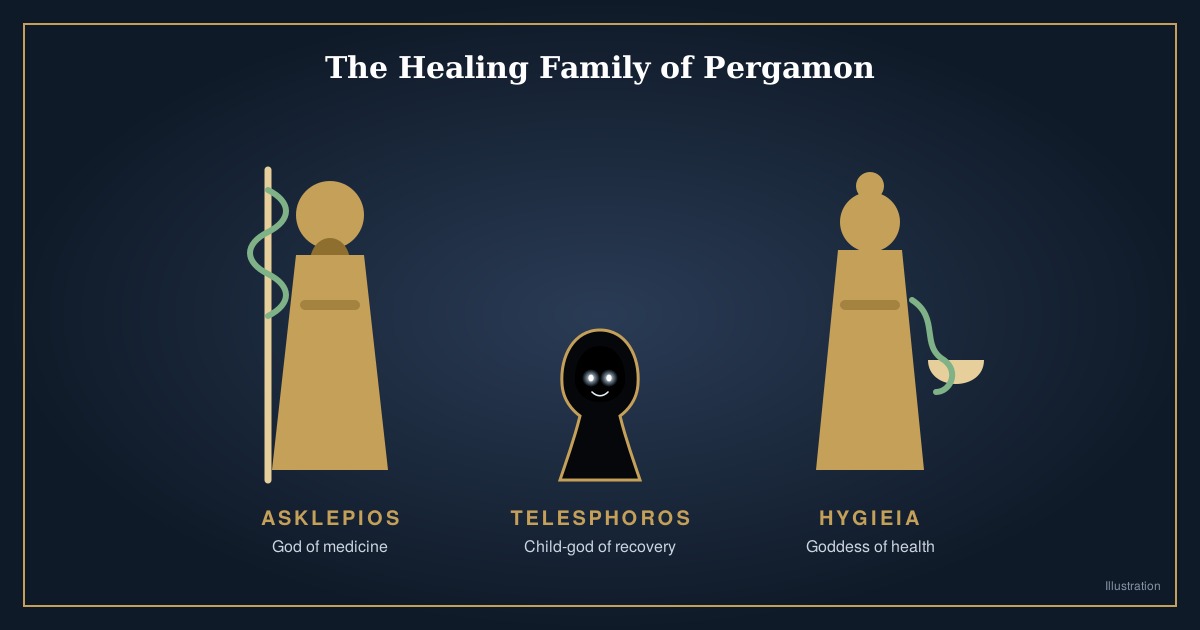
He belonged to the family of Asklepios, the great Greek god of medicine. Asklepios worked with his daughter Hygieia, whose name gives us the word “hygiene”. Telesphoros joined them as the third member of the team. You often see the three together in art.
A star of Pergamon
His cult grew famous at Pergamon, in what is now Turkey. Pergamon had one of the greatest healing sanctuaries of the ancient world. Patients came there for dream cures, baths, music and rest. The famous doctor Galen was born in Pergamon, and the sanctuary was grandly rebuilt under the Roman emperor Hadrian. Telesphoros rose to popularity in this age.
Chapter 3Why is he so creepy?
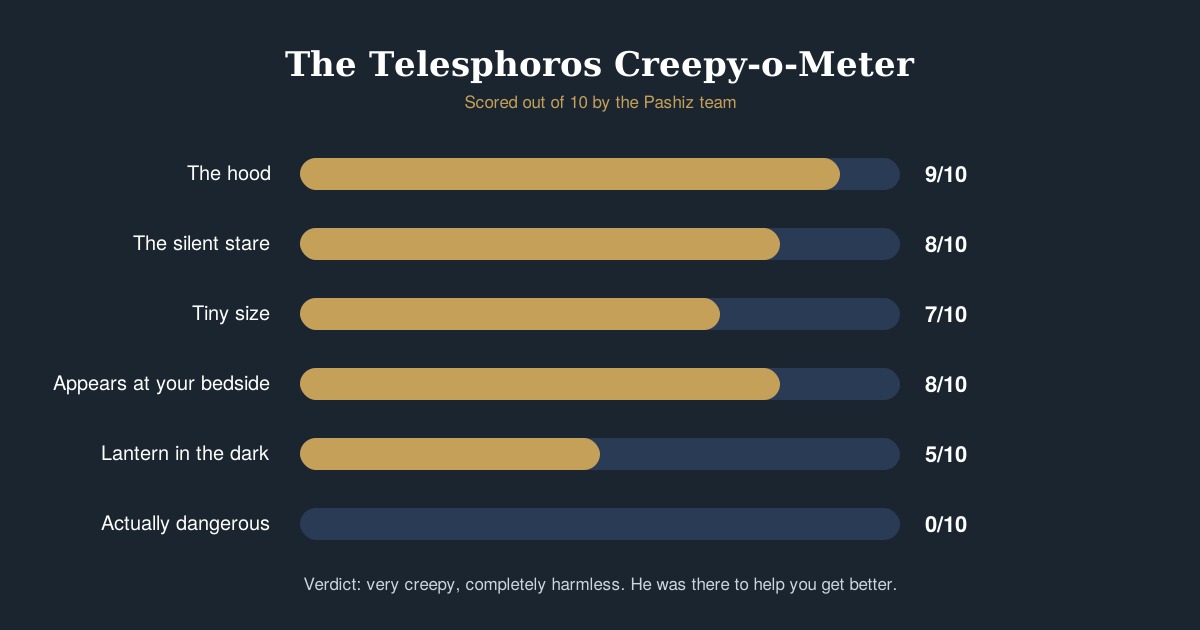
Let us be honest. Telesphoros is a gift to anyone who likes spooky history. Here is why he gives us the shivers.
The hood
He wears a long hooded cloak that covers his head. Often you can barely see his face. It looks like a tiny monk, or a very small wizard.
The size
He is always shown as a child or a dwarf-like figure. A small, silent, hooded figure standing at your bedside is a classic horror film image.
The job
He turned up when you were ill. Patients slept in the sanctuary hoping the gods would visit their dreams. Telesphoros may have been one of the visitors.
The mystery
Where did the hooded look come from? Some scholars link it to the hooded cloaks of Gaul. Others see local Anatolian roots. Nobody can say for certain.
Chapter 4Why would a small city like Myrina strike him?
Myrina sat on the coast of Aeolis, in the north-west of Asia Minor. It was close to Pergamon, and the great healing sanctuary shaped life across the region. So putting a healing god on your coins was good local pride.
A city with an Amazon queen
Myrina also had a good legend. Its name was linked to Myrina, a legendary Amazon queen. Ancient writers tell us the city was badly damaged by an earthquake in AD 17, along with other cities of the region, and the Roman world helped to rebuild it. A city with a rebuilt history and a famous neighbour had plenty to celebrate.
What does “pseudo-autonomous” mean?
This is a coin collector's term. Under Roman rule, many Greek cities struck their own bronze coins. Some carried the emperor's portrait. Others, like this one, carried only local gods and symbols. These are called pseudo-autonomous coins. They look as if the city were still independent, but they were made under Roman rule.
Chapter 5The coin: a tiny bronze with a big personality
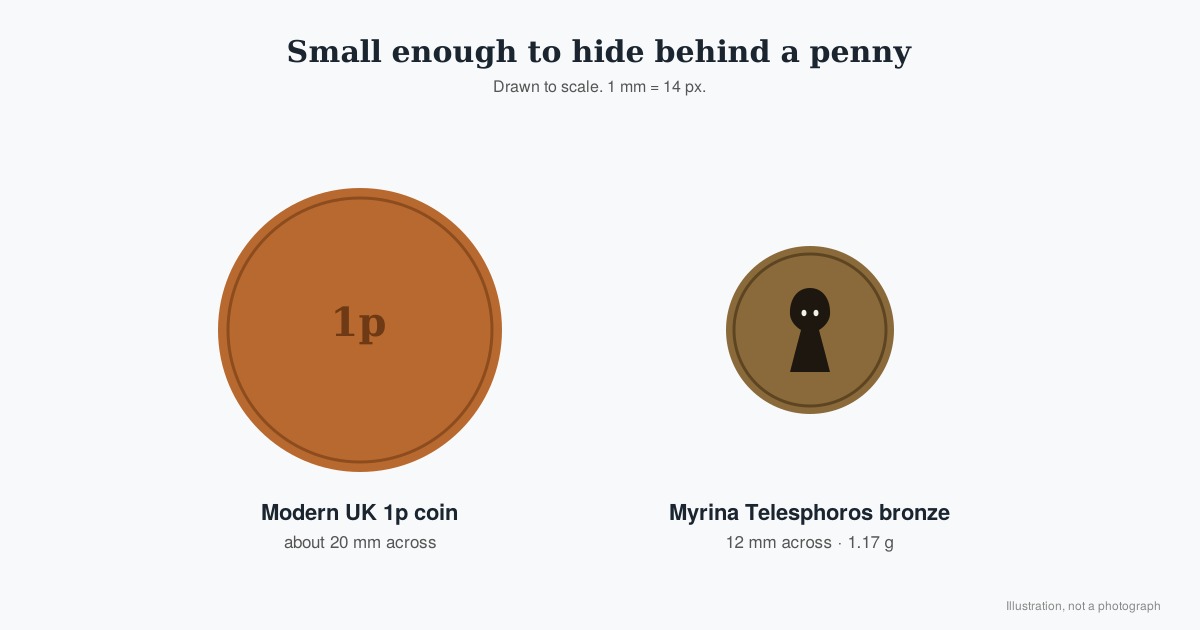
Now to the reason for this post. We have a Myrina bronze showing Telesphoros on the front. It is an extremely rare type. It is also very small. At only 12 mm across, it is smaller than a modern UK penny and weighs roughly a third as much.

Aeolis, Myrina. 2nd century AD
Telesphoros on the front. A kithara on the back. Extremely rare.
| Issuer | Aeolis, Myrina (pseudo-autonomous issue) |
|---|---|
| Date | 2nd century AD |
| Metal | Bronze (AE) |
| Size and weight | 12 mm, 1.17 g |
| Front | Telesphoros, the hooded child-god |
| Back | MYPEINAIΩN, a kithara seen from the front, with two beads |
| Rarity | Extremely rare. Not in SNG. |
| Auction comparison | A similar piece sold at Numismatik Lanz München, Auction 149, lot 178, for 340 EUR |
The kithara: a musical clue
The back shows a kithara, the large wooden lyre of Apollo. This fits well. Apollo was the father of Asklepios in Greek myth, so the instrument connects the coin back to the healing family. Apollo was also worshipped near Myrina, at the sanctuary of Grynion. The inscription reads MYPEINAIΩN, which means “of the people of Myrina”.
Chapter 6Why collectors love this kind of coin
- It has character. A hooded child-god is far more memorable than a plain portrait.
- It is rare. This type does not appear in the standard SNG reference, and auction records are few.
- It is affordable history. Small bronzes give you a real object from a Roman-era Greek city without a gold-coin budget.
- It tells a story. Healing, music, legends and a little bit of horror, all in a coin smaller than a fingernail.
Want to hear when another Telesphoros coin appears? Log in to your free Pashiz account, open Wishlist & alerts and add the keyword “Telesphoros”. We will email you when a match is listed.
QuestionsFrequently asked questions
Who was Telesphoros?
A small, hooded child-god of recovery. He accompanied Asklepios, the god of healing, and was especially popular in the 2nd century AD.
What does Telesphoros mean?
The name is usually understood as “the one who brings things to completion”. For a healing god, that meant bringing an illness to its end.
Why is Telesphoros always wearing a hood?
The hooded cloak is his trademark. Scholars debate where it came from. Some point to hooded cloaks from Gaul, and others to local traditions in Asia Minor.
What is a pseudo-autonomous coin?
It is a Roman-era city coin that shows local gods and symbols instead of the emperor's portrait.
How much is a Myrina Telesphoros coin worth?
It depends on condition and rarity. A comparable coin sold at Numismatik Lanz München, Auction 149, lot 178, for 340 EUR. The price of our coin is on its shop page.
Is it a genuine ancient coin?
Yes. Every coin we sell is checked by our specialists, and we are an NGC and PMG authorised dealer.
Take the creepy little god home
An extremely rare Myrina bronze, ready to ship from London.
View the Telesphoros coin Browse all Greek coins