

NGC vs PCGS: Which Is Better for Ancient and Islamic Coins?
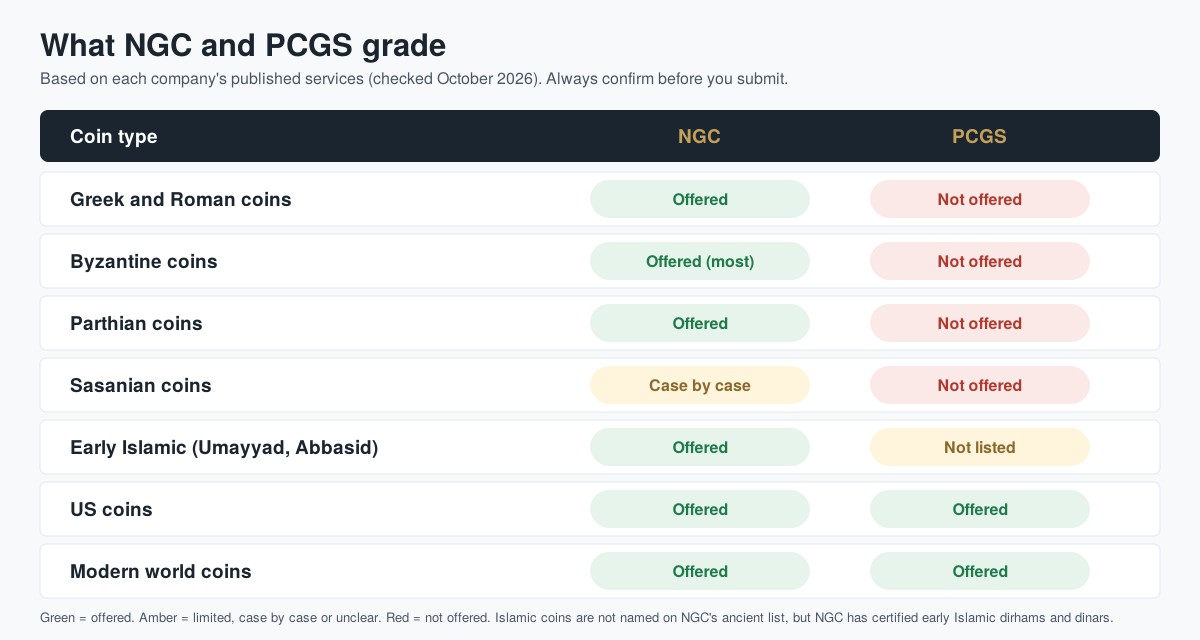
For Greek, Roman, Byzantine, Parthian and early Islamic coins, NGC is the realistic choice. It runs a dedicated ancients programme. PCGS grades US and modern world coins very well, but we found no sign that it offers grading for these ancient types. Always check a coin's eligibility before you submit.
Collectors often ask which grading company is “better”. For modern and US coins that is a close debate. For ancient and Islamic coins, the answer is simpler, because the two companies do not offer the same services.
Step 1What each company actually grades
NGC Ancients
NGC grades most Western ancient coins from the origins of coinage to about AD 500, and most Byzantine coins up to 1453. It also takes Parthian coins. Sasanian coins are accepted only at NGC's discretion, case by case, so contact us before submitting one.
NGC does not grade ancient Indian coins, such as Kushan issues. It also will not grade ancient cast coins, even if they are genuine.
PCGS
PCGS began grading a small group of ancient coins in August 2025. The service covers Chinese Qing dynasty cash coins from 1644 to 1850. It uses its own 10-point scale and, at launch, ran through the PCGS Shanghai office.
That is the whole ancient programme so far. Greek, Roman, Celtic, Byzantine and Islamic coins are not part of it. PCGS also grades world coins, but its world coin form does not list ancient or early Islamic coins.
Step 2How the grades work
| NGC Ancients | PCGS (ancient service) | |
|---|---|---|
| Grade scale | Adjectival, from Poor to Gem Mint State | 1 to 10 scale |
| Extra scores | Strike and Surface, each out of 5 | One overall grade |
| Style recognition | Fine Style designation for superior engraving | None stated |
| Eye appeal | Star designation for exceptional eye appeal | None stated |
| Guarantee | Separate NGC Ancients guarantee | Covers grade and authenticity |
For ancient coins the NGC system matters because no two ancient coins are struck alike. A well-struck coin on a flawed surface, and a weak strike on a clean surface, can both be “Choice XF”. The Strike and Surface scores show which.
The Fine Style and Star designations help too. They tell a buyer that the coin has superb artistry or exceptional eye appeal, which is what ancient collectors often pay most for.
Step 3What about Islamic coins?
Islamic coins are less clear-cut, and it is worth being careful here.
- Early Islamic coins. NGC has certified Umayyad dinars and dirhams, and its ancient list names Artuqid and Zengid figural bronzes. These are strong candidates for NGC.
- Sasanian coins. NGC accepts them only at its discretion, usually in groups or specialised collections.
- Later Islamic coins. Ottoman, Mughal, Qajar and similar coins are generally handled as world coins. Eligibility and fee tiers differ, so check before you submit.
- PCGS. We could not find Islamic coins listed in its ancient programme or on its world coin form.
The safest rule is to ask first. Send us a photo and the details, and we will tell you which service the coin fits, if any.
Step 4Quick picker: which company for my coin?
Which grader should I use?
Fair playWhen PCGS makes sense
PCGS is a major name, and for some coins it is the better choice.
- US coins. Many American collectors prefer PCGS, and its holders are well known in that market.
- Modern world coins. Both companies grade them, so the choice often comes down to which holder your buyers prefer.
- Qing Chinese cash coins. PCGS now offers a dedicated service for these.
If your coin is Greek, Roman, Byzantine, Parthian or early Islamic, the question mostly answers itself.
Does it matter?Will the slab change what buyers pay?
For ancient coins, collectors care about attribution, history and eye appeal as much as grade. A certified coin gives buyers independent proof of authenticity and condition, which is useful online where they cannot hold the coin. It does not replace the coin's story.
That is why we look at each coin with you first. If the value is under the break-even point, grading may not pay. Our guide to whether grading is worth it explains the numbers, and our tier guide helps you pick the right NGC tier.
QuestionsFrequently asked questions
Does PCGS grade ancient coins?
Only a small group. In August 2025 PCGS began grading Chinese Qing dynasty cash coins. We found no PCGS service for Greek, Roman, Byzantine or Islamic coins.
Is NGC or PCGS better for Islamic coins?
NGC has certified early Islamic dinars and dirhams, and PCGS does not list them. Eligibility varies by coin, so check with us before you submit.
What is Strike and Surface on an NGC ancient label?
They are two scores out of 5. Strike rates how well the coin was struck. Surface rates its condition, including corrosion, marks and cleaning.
Can I submit Sasanian coins to NGC?
NGC accepts them only at its discretion, case by case. It usually prefers large groups or specialised collections. Contact us first.
Do I need to choose a company before I visit?
No. Bring or send us the coin and we will tell you whether it is worth grading and where it fits.
Sources
Checked October 2026. Services can change, so confirm on each company's site.
- PCGS: Launches Ancient Coin Grading for Select Chinese Coins
- NGC Ancients
- NGC Ancients: Coins We Grade
- NGC Ancients: Grading
- PCGS World Coin submission form
- NGC: Certifies Important Early Islamic Gold Coin
Not sure which route is right?
Send us a photo of the coin. We will tell you whether it can be graded, by whom, and whether it is worth it.
NGC submission form (PDF) Ask us about grading