

Short answer: to buy ancient coins online safely in the UK, buy from a seller you can check, read the full description, and study clear photos of both sides. Ask about provenance, get the guarantee in writing, and pay in a way that protects you. Fakes exist, so a low price and a vague listing are warning signs. Start with low-cost coins until you trust the seller.
It is easy to buy ancient coins online. Doing it safely takes a little care. You cannot hold the coin, so you rely on the photos, the description and the seller. This guide shows what to check, and it is written for UK buyers.
The good news is that you do not need a lot of money to start. Over half of the lots that sold in two of our recent online auctions went for under £50. Safe buying is about method, not budget.
Seven checks before you buy ancient coins online
Run through these every time. They take about ten minutes and they catch most problems.
- Know who is selling. Look for a real business name, a postal address and a way to contact them. Check how long they have traded. Trade bodies such as the BNTA set a code of ethics for their members, so membership is worth looking for.
- Read the whole description. A good listing gives the ruler, the mint, the metal, the weight and the diameter. It should also give a reference such as RIC, Sear or Göbl. It should state the condition honestly, including any cleaning or repair.
- Study both sides in large photos. Do not buy on one flattering image. You need sharp pictures of the obverse and reverse, ideally of the actual coin and not a stock photo.
- Ask about provenance. Where did the coin come from? A dealer should be able to say if it comes from an old collection, a previous sale or a known source. A seller who will not answer is a red flag.
- Get the guarantee in writing. The BNTA code asks members to guarantee authenticity in writing for ten years. Whatever the seller promises, check the exact wording and the time limit.
- Read the returns terms. Find out if you can return a coin, how long you have and who pays postage. Do this before you buy, not after.
- Pay in a protected way. Choose a method that gives you a route to get your money back. The section on paying safely explains your options.
Looking for ancient coins from a UK dealer? See every coin with weight, size and clear photos.
Shop the coin store →How to spot a fake
Forgeries of ancient coins are common, and they are not all easy to see. The International Bureau for the Suppression of Counterfeit Coins (IBSCC), which the IAPN founded, publishes advice on how to detect them. Its guide to cast fakes gives these signs.
| Sign | What to look for |
|---|---|
| Tiny pits | Small round holes in the fields or on raised parts. Forgers may hide them under dirt. |
| Soft detail | Blurry letters and rounded edges. A struck coin is usually sharp, and often has some lustre even when worn. |
| Surface shape | A struck coin's surface is slightly concave. A convex surface can suggest a cast. |
| Fake patina | Artificial age that looks too even. Check it under a magnifier. |
| Distracting damage | Scratches and punch marks can draw your eye from flaws. Look at the whole coin. |
| One good side | If one side looks cast, the other side is fake too, even if it looks perfect. |
Two more points from the IBSCC are worth knowing. A cast copies a real coin exactly, so comparing style will not reveal it. Focus on the surface and the strike. An old-collection story or a famous auction house does not guarantee a coin is genuine. Forgers favour old lots, and fakes sometimes pass through good sales.
Green flags
- Large, clear photos of both sides
- Weight, diameter and reference given
- Honest notes on cleaning or repair
- A written guarantee and clear returns
- A seller who answers questions fully
Red flags
- A price far below similar coins
- One blurry photo, or a stock image
- No weight, no size, no reference
- Pressure to pay quickly or off the platform
- No answer when you ask about provenance
Where to buy ancient coins online
There are three main routes: a dealer shop, an online auction or a marketplace. Each has different checks.
| Route | How it works | Check first |
|---|---|---|
| Dealer shop | You pay the listed price and the dealer ships the coin. | Guarantee, returns terms, and the dealer's track record. |
| Online auction | You bid. The final price is the winning bid plus the fees in the auction terms. | The buyer's fees, VAT, postage, and the payment and return rules. |
| Marketplace | Many dealers sell through one site. | Who the actual seller is, and their own terms. |
The same coin can cost very different amounts across these routes, so compare before you buy. Rules for auctions can differ from shop sales, so always read an auction's terms before you bid. We sell through our own shop and auctions, and through marketplaces such as VCoins and Ma-Shops.
What about graded slabs?
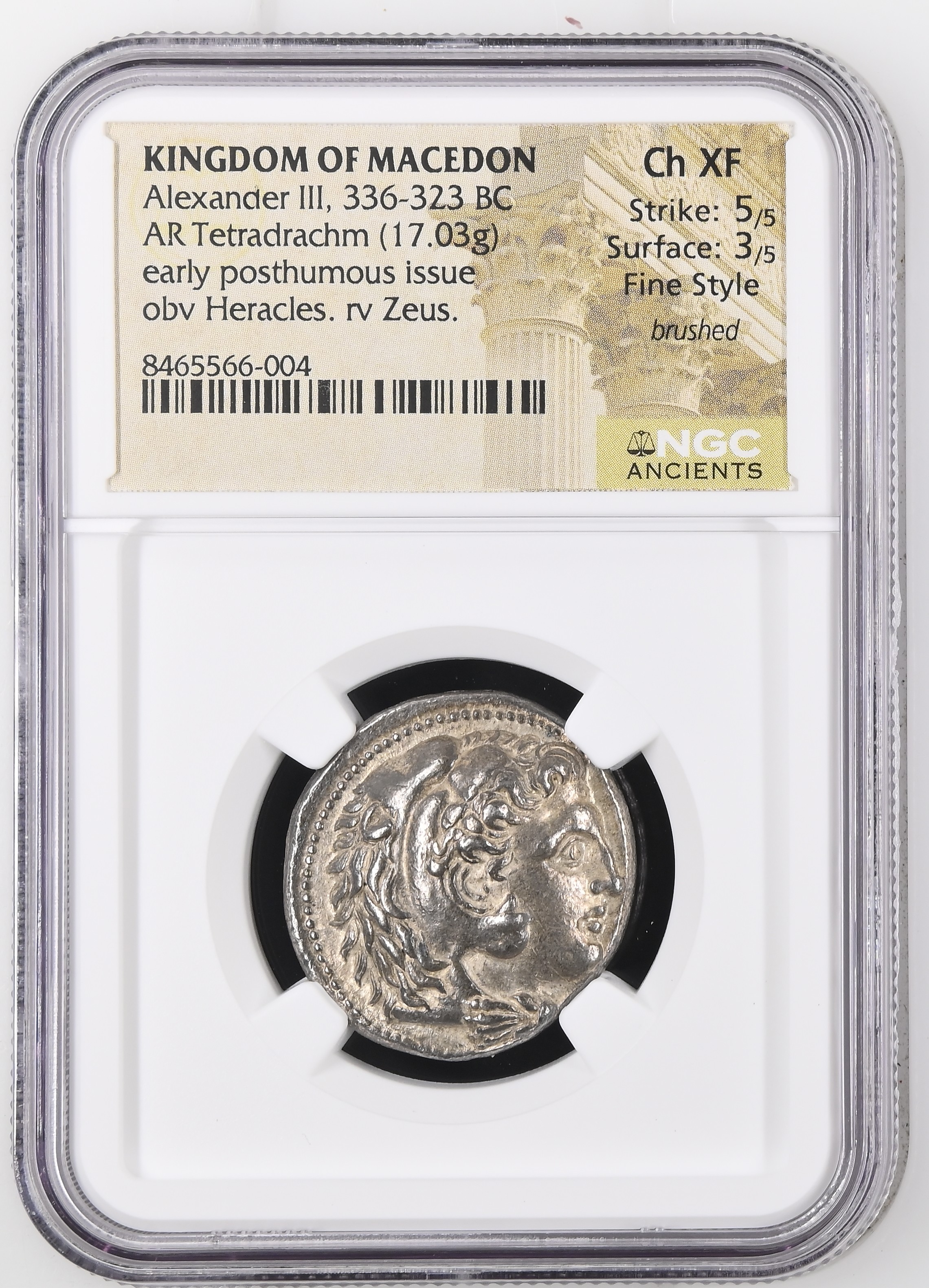
NGC grades ancient coins and seals them in a slab. A slab with a clear authenticity decision gives you extra comfort, but check it. NGC itself warns that holders can be counterfeited, so run the certification number through NGC's free lookup and compare the photos. Our guide to verifying an NGC or PMG certificate shows how.
A slab also changes how you read the grade. Ancient coins get a wear grade plus Strike and Surface scores out of five, not a 1 to 70 number. Our article on ancient coin grading explains this with real slabs.
Paying safely and your UK rights
How you pay matters as much as what you buy. Here are the main points, with the limits.
Credit card (Section 75)
- Covers a single item that cost more than £100 and up to £30,000, says Which?
- The card company is jointly liable with the seller if the goods are not as described.
- It does not cover debit cards.
Debit card (chargeback)
- Section 75 does not apply.
- Your bank may be able to reverse a payment through the card scheme's chargeback process.
- Ask your bank how it works, as rules and time limits vary.
Notice the first limit. Many starter coins cost less than £100, so Section 75 will not cover them. For those coins, the seller's own guarantee and returns terms matter most. That is why checks 5 and 6 above come before you pay.
When you buy online from a UK business, the Consumer Contracts Regulations normally give you 14 days to cancel a distance sale. There are exceptions, for example live auctions you can attend in person. Check the seller's terms for how they apply to you.
Be careful with bank transfers. A transfer to a seller you do not know can be hard to get back if something goes wrong. For a new seller, a card is the safer choice.
Which protection applies?
Check your protection
Enter the price of one coin and how you plan to pay. This is general information, not legal advice.
Buying from abroad
Many ancient coin dealers sit outside the UK. That is fine, but it adds steps. You may owe import VAT, and sometimes customs duty, when the parcel arrives. The rates depend on the coin and its age. Check the rate for your coin on the gov.uk Trade Tariff before you buy, and add postage and any carrier fees to the price.
Buying from a UK dealer avoids these extra costs, and UK consumer rules usually apply more clearly.
Provenance and the law
A reputable dealer checks where a coin comes from. The BNTA code says members must make reasonable enquiries about earlier ownership. They must not buy or sell items until they know the items were not stolen or illegally excavated. It also bans buying undeclared Treasure.
The law adds one rule worth knowing. Under the Cultural Property (Armed Conflicts) Act 2017, it is an offence to deal in unlawfully exported cultural property. The offence applies if you know, or have reason to suspect, that it was exported unlawfully. The offence covers property exported from occupied territory after 7 August 1956 and imported into the UK on or after 12 December 2017. The government guidance says it covers only a small, special category of objects of great importance, and it does not mention coins.
In practice, this means one thing for buyers. If a seller will not say where an object came from, walk away. We are not lawyers, so take legal advice if you are unsure about a specific item.
Where to start
Pick a period you like and a low price. A common, well-described coin teaches you more than one rare coin you cannot judge. Browse by empire.
Our guide to the best ancient coins under £100 picks six coin types for beginners, with a link to each category.
- Choose a period and a budget.
- Pick a seller you can check.
- Read the description and study both photos.
- Ask one question about provenance.
- Pay by card and keep the receipt.
Questions people ask
Is it safe to buy ancient coins online?
It can be, if you choose the seller carefully. Check who they are, read the full description, look at clear photos of both sides, and pay in a way that gives you protection.
How can I tell if an ancient coin is fake?
Look for tiny pits, soft detail, fake patina and an odd surface shape. Check both sides. If you are unsure, ask the seller for more photos or ask a dealer you trust.
Should I buy from eBay or a dealer?
Either route can work, but a dealer usually gives a guarantee and detailed descriptions. On any marketplace, check who the actual seller is and read their terms.
Do I need a certificate of authenticity?
A written guarantee from a reputable seller is worth having. A slab from a grading company adds a certification number you can check yourself. Neither replaces looking at the coin carefully.
Can I return an ancient coin?
That depends on the seller's terms and where you bought it. UK distance sales from a business normally carry a 14 day right to cancel, with exceptions. Read the terms first.
Does Section 75 cover my coin?
Only if you paid by credit card and the single item cost more than £100 and up to £30,000. It does not apply to debit cards.
Will I pay import VAT on a coin from abroad?
You may. It depends on the coin and its age. Check the gov.uk Trade Tariff for your coin, and add the cost to your budget.
What is a good first ancient coin?
A common Roman or Sasanian silver coin in a clear grade. Our shop and our under £100 guide show good starting points.
Not sure about a coin?
Send us the listing and the photos. We are happy to give a second opinion before you buy.
Shop the coin store Upcoming auctions WhatsApp usSources: BNTA, Code of Ethics; IBSCC via CoinsWeekly, How to detect forgeries (Part 2, cast counterfeits); Which?, Section 75 of the Consumer Credit Act; Northern Ireland Business Info, Exemptions from the right to cancel; UK Government, Cultural Property (Armed Conflicts) Act 2017, section 17; UK Government, Guidance on the dealing offence; HMRC, Notice 362: imported antiques (withdrawn 2020; the Trade Tariff now shows rates). Auction statistic: Pashiz E-Auctions 6 and 7, 620 lots, 210 sold, median £44.