
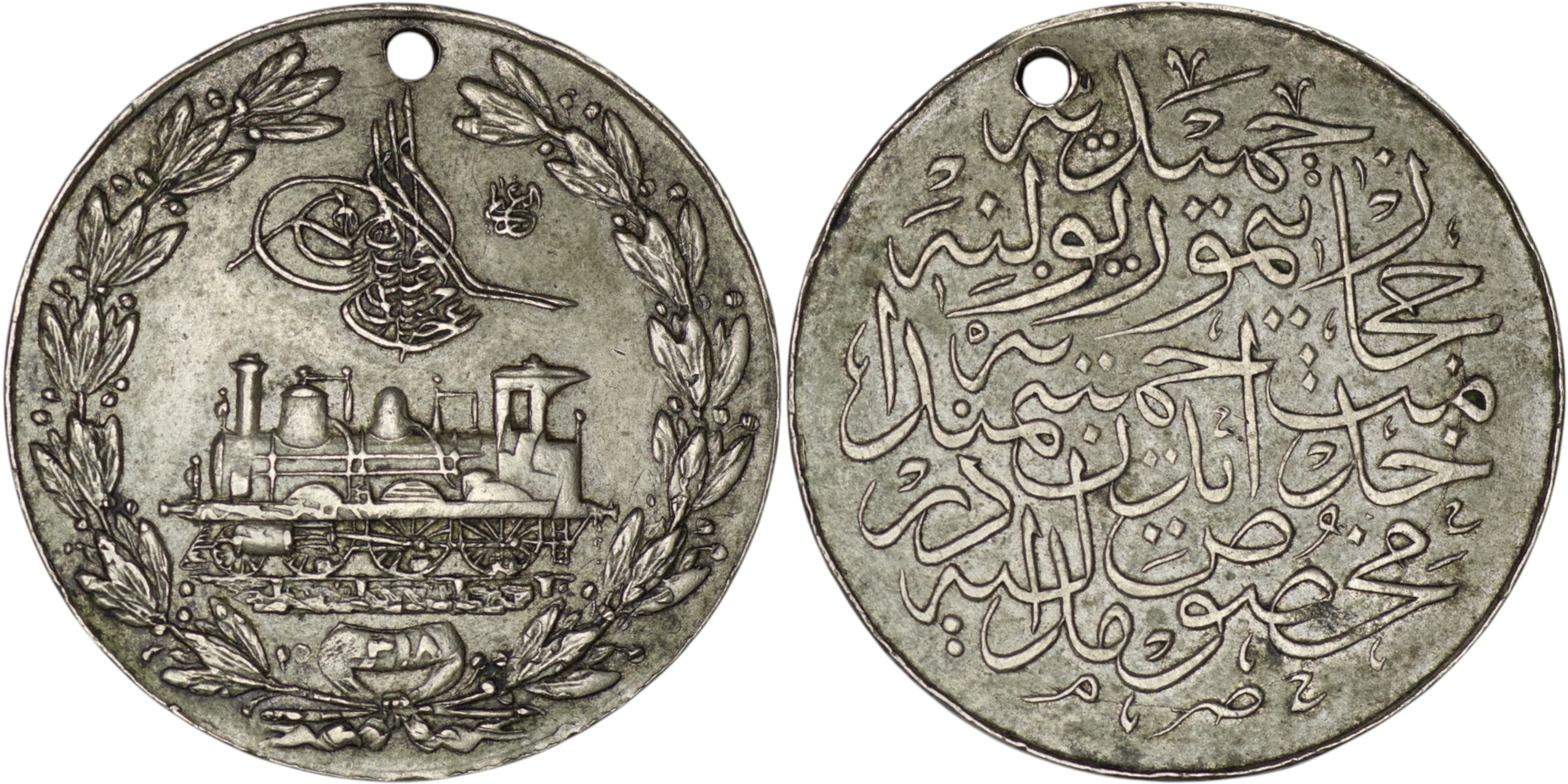
Lot 313: Ottoman Empire. Sultan Abdul Hamid II (1876-1909). Cupro-nickel Medal. AH 1318
Ottoman Empire. Sultan Abdul Hamid II (1876-1909). Cupro-nickel Medal ( 12.93g/ 30mm). AH 1318. Commemorative medal issued for the inauguration of the Hejaz Railway (Hamidiye–Hijaz Demiryolu) in 1900. The obverse features the tughra of Sultan Abdul Hamid II with the title **"al-Ghazi"** to the upper right above a steam locomotive, all enclosed within a laurel wreath, with the date displayed on a ribbon below. The reverse bears the Ottoman Turkish inscription, written in Arabic script, reading: *"Medal reserved for patriots who have served the Hamidiye Hejaz Railway."* As commonly encountered, the medal is pierced. Extremely Fine.
In 1900, Sultan Abdul Hamid II announced the construction of the Hejaz Railway, intended to connect the holy cities of Medina and Mecca. The ambitious project was financed entirely through public donations and was operated by Ottoman subjects, although its chief engineer was German. To recognise contributors, commemorative medals were awarded in several metals, with wearable examples produced in both 68 mm and 30 mm sizes.
Construction ultimately failed to reach Mecca due to resistance from Arab rebels. Continued opposition throughout the First World War ensured that the railway terminated at Medina.
Donors received medals according to the amount they contributed. A nickel medal was awarded for donations of 5–50 lira, a silver medal together with the honorary title of **Bey** for contributions of 50–100 lira, and a gold medal along with the title of **Pasha** for donations exceeding 100 lira. At the time, one Ottoman lira was equivalent to 100 kurush, while each kurush was divided into 40 para.
Share this lot: